How-to
Weekly or Every Two Weeks: Picking a Mowing Schedule
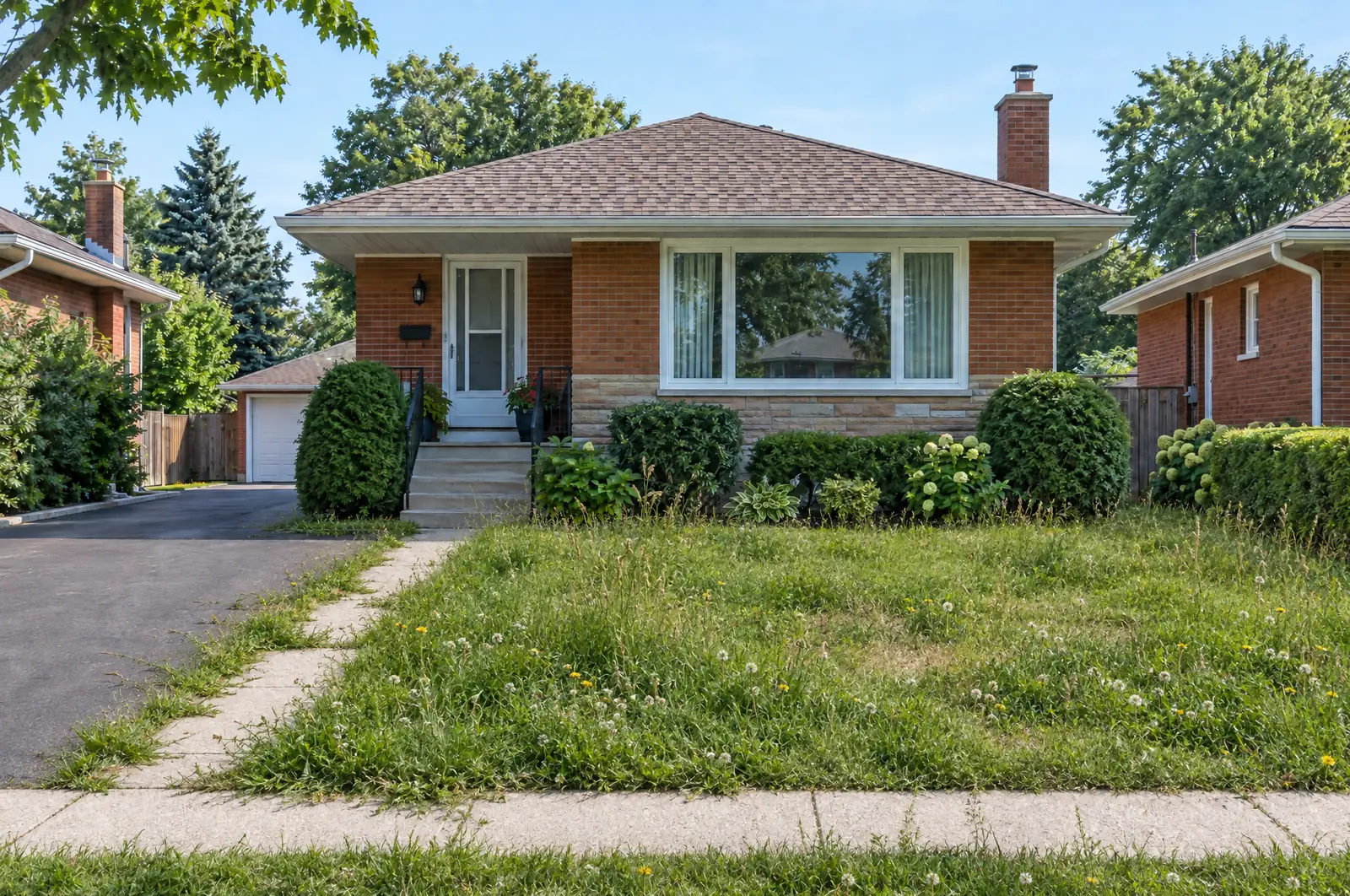 Illustration
For most Canadian lawns, weekly mowing is the safer pick. In spring and early summer, grass grows fast. The City of Hamilton says to cut every four to five days then. Every two weeks works only when growth slows down, like a dry midsummer, a shady yard or late fall. The test is simple: never cut off more than one third of the grass at once.
What decides how often you should mow?
How fast your grass grows. That's it. Purdue University Extension says mowing frequency depends on how fast the grass grows. A calendar can't tell you that. Your lawn can.
The rule that sets the pace is the one-third rule. Red Deer puts it plainly: mow often enough that no more than one third of the height is cut. Ohio State University Extension says frequency depends on that same rule.
So the question isn't really "weekly or every two weeks?" It's "how many days until my grass is one third too tall?" In May, that comes fast. In a dry August, it can take a lot longer.
What does the one-third rule look like in real numbers?
Hamilton suggests a blade height of about 6 to 7.5 cm (2.5 to 3 inches). Ohio State gives an example: if you keep a lawn at 3 inches, don't let it pass 4.5 inches before you mow. That's about 7.5 cm kept, and about 11 cm before the next cut.
Purdue is a bit stricter. It says if you mow at 3 inches, mow when the grass reaches 4 inches, or about 10 cm. Hamilton adds a hard cap: no more than 2.5 cm (1 inch) cut at any one time.
Want to check your own lawn? Push a ruler into the grass down to the soil. If it reads 3 to 4 cm above your mowing height, it's time.
How often do Canadian cities say to mow?
Several cities post their own advice. Here's what they say on their official pages:
| Source | Fast growth | Slow growth |
|---|---|---|
| City of Hamilton, ON | Every 4 to 5 days in spring and early summer | About once a week in late summer and fall |
| City of St. Albert, AB | About every 4 to 5 days in the growing season | About once a week in the shoulder season |
| City of Red Deer, AB | Every 5 to 7 days so the lawn doesn't get too long | |
Notice what's missing. None of these cities tells you to mow every two weeks. Their advice runs from twice a week in the busy weeks to once a week when growth slows.
Purdue, in Indiana, does mention it. It says some lawns may need mowing twice a week in spring and fall, and only once every 2 weeks in summer. So every two weeks has a place. It's just a narrow one.
When is weekly mowing the right choice?
Weekly fits most yards for most of the season. Pick it if any of these sound like your lawn:
- Full sun and regular rain. Grass in good conditions grows quickly from May into July.
- You like a tidy look. The lawn never gets shaggy between cuts.
- You leave the clippings. Short clippings drop down and break down fast.
- You want fewer surprises. One wet week can push a two-week lawn far past the one-third mark.
Even weekly can fall behind in spring. Ohio State says active growth might mean mowing more than once a week. That's why Hamilton and St. Albert both say every four to five days in the peak weeks.
Why does mowing too rarely hurt the lawn?
Long gaps force a big cut. Ohio State says breaking the one-third rule risks scalping. Scalping can badly damage or even kill grass, mostly during summer stress.
The clippings cause trouble too. Red Deer says longer clippings sit on top of the grass instead of settling into the soil. You end up with clumps on the lawn, or you rake them up. Our post on leaving clippings on the lawn explains why short ones are better.
When can you get away with every two weeks?
Every two weeks works when the grass is barely growing. Good fits:
- Dry stretches in midsummer. Purdue says some lawns need a cut only every 2 weeks in summer.
- Deep shade. Grass under big trees often grows slower than grass in full sun.
- Late fall. Growth winds down as the weather cools.
- Small, low-traffic yards where a bit of shagginess doesn't bother you.
Keep one thing in mind. A lawn that's dry and brown in July may need no mowing at all. Our post on mowing in heat and drought covers that.
The risk with every two weeks is the weather. Two warm, rainy weeks in June can add a lot of height. Then you have a choice between a big cut that breaks the rule or two cuts in a row.
What if the grass already got too long?
Don't take it all off at once. Three official sources give the same kind of fix:
- Hamilton: cut off a little bit, then lower the blade and cut off a little more.
- Purdue: raise the mowing height, then lower it back over a few mowings.
- St. Albert: double cut, with the second pass at a right angle to the first.
Back from two weeks at the cottage? Set the mower to its highest notch for the first pass. Mow again a few days later at your normal height. Our mowing height guide shows how to check what your mower really cuts at.
Can you switch schedules during the season?
Yes, and many lawns do best that way. A simple plan for a sunny Canadian yard:
| Time of year | Growth | Schedule |
|---|---|---|
| Spring to early summer | Fastest | Weekly at least |
| Hot, dry midsummer | Slow | Weekly or every two weeks |
| Late summer and fall | Slower | About weekly |
| Late fall | Winding down | As needed until it stops |
The table follows Hamilton and St. Albert for the busy weeks, and Purdue for summer. Your own lawn has the final say. Look at it, and measure it, before you decide.
Our how often to mow FAQ has notes on how the season changes across Canada.
Does the schedule change what you pay for lawn mowing?
Yes. How often your crew comes is one of the things that sets your price, along with lawn size, slopes and add-ons. Our lawn mowing page lists what changes the price. We measure your lawn from satellite images, so no one needs to visit.
Every two weeks means fewer visits. But a lawn that gets too long between visits can need a slower, double cut. For most sunny lawns, weekly in the growing season is the schedule that keeps the grass healthy. Our post on what affects lawn mowing cost goes deeper.
Who handles the schedule for you?
Golden Oak Lawn Care matches you with a vetted, insured local crew. They do the work. We stand behind it with the Golden Oak Guarantee.
You pick weekly or every two weeks. Your same crew comes on your set day and texts you a photo after every cut. Going away? Pause by text. Book the Worry-Free Lawn Season, paid up front, and your first cut is free.
Want it handled? Get your price in 60 minutes, or call 1-866-904-LAWN.
Mowing Schedule Questions
Is it OK to mow every two weeks?
Sometimes. It works when grass grows slowly, like in a dry summer or deep shade. Purdue says some lawns need a cut only every 2 weeks in summer. In spring, most lawns need weekly or more.
How many days should I wait between mowing?
It depends on growth. Hamilton and St. Albert say every 4 to 5 days in the fast weeks. Red Deer says every 5 to 7 days. When growth slows, about once a week is enough.
What is the one-third rule for mowing?
Never cut off more than one third of the grass height at once. If you keep your lawn at 7.5 cm (3 inches), mow before it passes about 11 cm. Hamilton also says to cut no more than 2.5 cm (1 inch) at a time.
Can I change from weekly to every two weeks mid-season?
Yes. Many lawns need weekly cuts in spring and less in a dry midsummer. Let the one-third rule guide you, and change the pace as growth changes.
Sources: City of Hamilton, grass cutting tips, City of St. Albert, grasscycling, City of Red Deer, grasscycling, Purdue Extension, lawn care, Ohio State Extension, lawn mowing.