How-to
String Trimmer or Lawn Edger: What Your Lawn Actually Needs
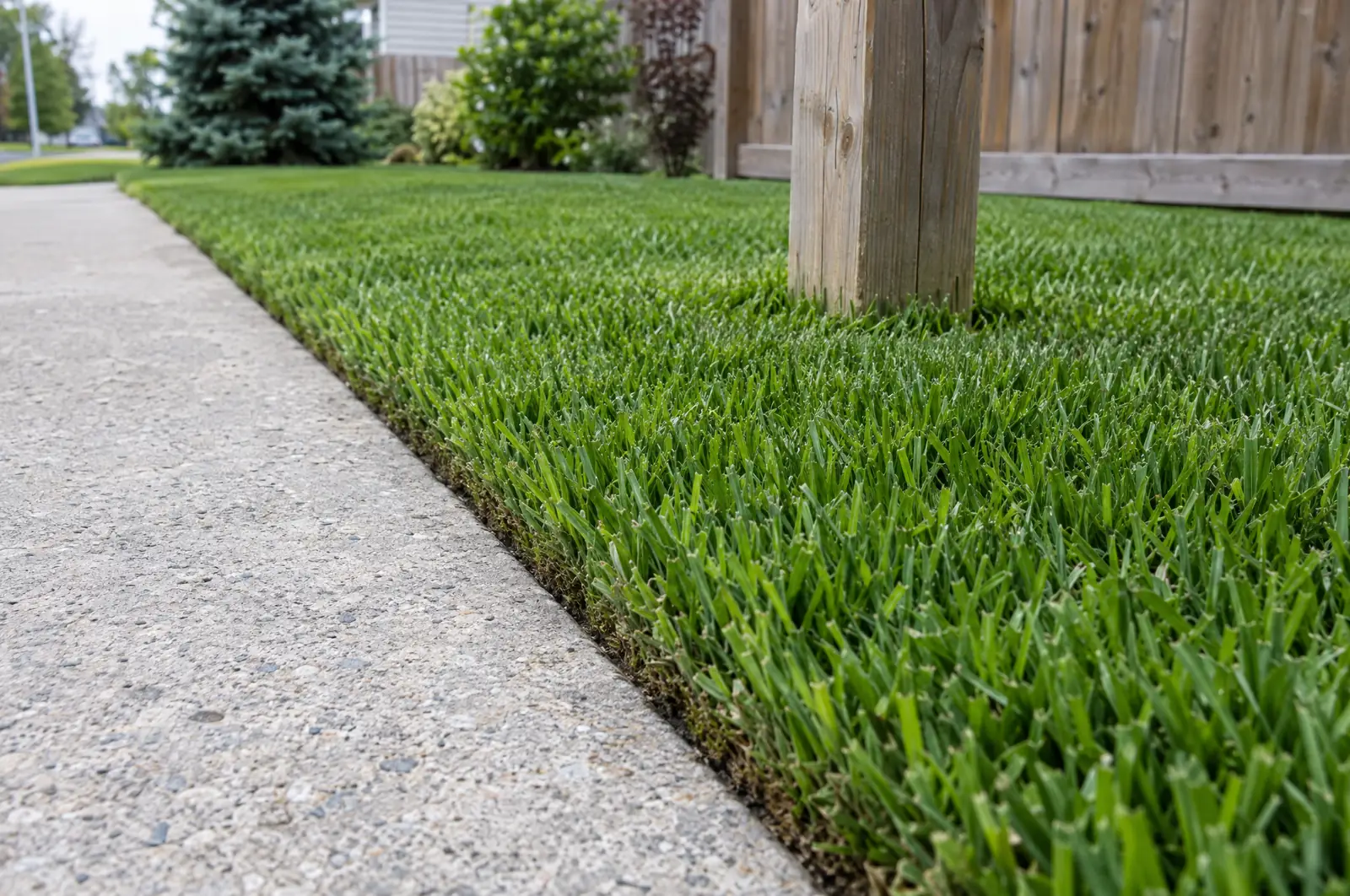
Most yards need a string trimmer every time you mow. It cuts the grass your mower can't reach, along fences, posts, trees and the house. A lawn edger does one job. It cuts a clean line down into the soil where the lawn meets a sidewalk, driveway or curb. Got lots of concrete edges? An edger is worth having. Not many? A trimmer for upkeep and a sharp spade for the beds will do.
What does a string trimmer do?
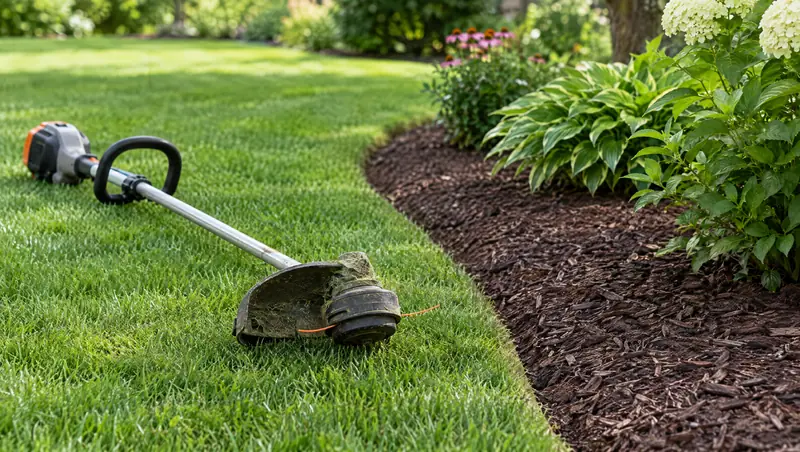
A string trimmer spins a piece of nylon line very fast. Virginia Tech Extension calls it a hand-held tool with a flexible line. It cuts grass and similar plants around things that don't move. You might call it a weed whacker, a weed eater or a line trimmer. It's all the same tool.
The line spins flat, close to the ground. That makes it great for cutting into tight spots:
- Along fences, walls and the base of the house
- Around posts, the mailbox, rocks and play sets
- Around trees, with care (more on that below)
- On small banks and corners where the mower won't fit
Virginia Tech says to use a string trimmer only on grass and similar weeds. It's not made for thick brush or young trees. Weeds in the cracks of the walk? Our partner crews don't spray, and Golden Oak doesn't give weed killer advice.
What does a lawn edger do?
Virginia Tech Extension says a lawn edger separates a lawn from a walkway or other paved surface. Think concrete sidewalks, driveways and asphalt paths. Edgers come in two kinds.
- A power edger runs on a small gas engine or an electric motor. Its metal blade spins on its edge, so it cuts straight down. A small wheel rolls along the concrete to guide it.
- A manual edger is a half-moon blade on a long handle. You step it into the soil like a spade. Illinois Extension says a simple edge cut with an edging tool or a flat spade is often best for a new bed.
Here's the big difference. A trimmer cuts the grass blades. An edger cuts the turf itself. It leaves a sharp little groove between the grass and the concrete, and that groove takes a while to fill back in.
Why does grass keep creeping over the walk?
Lawn grass spreads sideways. K-State Research and Extension says Kentucky bluegrass spreads by underground stems called rhizomes. Those stems keep pushing out past the edge of the lawn. Give it a season or two, and a thick lip of sod creeps onto the walk.
Beds get the same treatment. Illinois Extension says grass grows toward and into beds about 7.5 to 10 cm (3 to 4 inches) a year. It says yearly edging helps a lot.
A string trimmer can't fix this on its own. It trims the blades, but the roots and stems stay put. An edger or a spade cuts down through them. For beds, Illinois Extension says a gap 10 cm (4 inches) deep and wide can easily hold back bluegrass. Our guide on how to edge flower beds walks you through that cut.
Which jobs need a trimmer, and which need an edger?
Here's how the work splits up in a typical yard.
| Job | String trimmer | Edger |
|---|---|---|
| Fence lines and the house | Yes, every mow | No |
| Trees, posts and the mailbox | Yes, but keep the line off the bark | No |
| Sidewalk and driveway | Touch-ups between edgings | Best for a sharp, deep line |
| Curb along the street | Touch-ups | Best, staying close to the curb |
| Flower beds | Touch-ups only | A half-moon edger or a spade |
| Gravel paths and stony spots | Yes, with line | No |
Two of those rows come straight from safety guides. Virginia Tech says not to use a lawn edger on gravel. It also says to stay close to the curb when you edge along a road. The Canadian Centre for Occupational Health and Safety (CCOHS) says not to use rigid blades in stony areas.
Can a string trimmer edge a lawn?
Yes, for upkeep. Turn the trimmer on its side so the line spins up and down. Walk along the concrete with the line just over the edge. Some trimmers have a head that turns for this job.
It works well once the line is already set. It has a harder time with three things:
- Straight lines. You hold the trimmer in the air, so the line can wobble. Long runs of walk can come out wavy.
- Thick sod. The line chews at a lip of old turf. It doesn't slice through it cleanly.
- Line wear. The line slaps the concrete and wears down fast.
Watch the line length too. Virginia Tech says auto-feed and bump-feed heads can let out more line than needed. That raises the chance of the line hitting you. For step-by-step help, see our post on how to edge a lawn.
When is a lawn edger worth having?
An edger is a one-job tool. It earns its spot in the shed when your yard has a lot of that job.
You'll likely want an edger if:
- You have long runs of sidewalk, driveway or curb
- You live on a corner lot with walks on two sides
- Grass has crept over the concrete after a year or two with no edging
- You like a deep, crisp groove along the walk
A trimmer on its own is likely enough if:
- Most of your edges are fences, beds and trees
- Your paths are gravel, where an edger doesn't belong anyway
- Your edges are already sharp and you touch them up each mow
For beds, you don't need a power edger at all. Illinois Extension says a hand-cut bed edge needs a touch-up once or twice a year. A sharp spade handles that.
Gas, corded or battery: does it matter?
All three do the job. The trade-offs are weight, shaking and how far you can roam. Virginia Tech Extension lays them out:
- Gas. Two-cycle engines run on a gas and oil mix. Virginia Tech says gas trimmers are heavy and shake the operator a lot. You can take them anywhere, though.
- Corded electric. Light and easy to handle. The cord limits how far you can go. Virginia Tech says not to run electric trimmers in wet conditions.
- Battery. No cord and no fuel. Virginia Tech says weight and run time between charges are the limits.
Virginia Tech also says newer electric string trimmers can match gas ones. Whatever you pick, CCOHS says to choose a tool with anti-vibration parts. Running gas? Refuel before you start, while the engine is cool. Never start a gas tool in a closed shed or garage. Virginia Tech says breathing the exhaust can be fatal.
How do you stay safe with each tool?
Both tools throw things. Virginia Tech Extension cites a U.S. Consumer Product Safety Commission report on this. It says power trimmers and edgers caused about 4,600 injuries a year that needed medical care. About one in three hurt the eyes.
CCOHS lists the gear to wear for trimmer work:
- Long pants or jeans, and no short sleeves
- Heavy-duty, non-slip gloves
- Safety boots with non-slip soles
- Safety goggles, or a face screen and safety glasses
- Hearing protection, muffs or plugs
Virginia Tech says to keep people, kids and pets out of a 15 metre (50 foot) circle around power lawn tools.
String trimmer tips
Hold it firmly with both hands and keep it at ground level, CCOHS says. Clear stones, glass and sticks out of the way first. Virginia Tech says to keep the head below your waist and tie long hair up.
Keep the line off tree bark. Illinois Extension says line rubbing a trunk over and over cuts into the bark. Then it reaches the living layer underneath. K-State says a mulch ring around the tree keeps trimmers and mowers back. More tips are in our post on weed whacking.
Edger tips
Virginia Tech warns that metal edger blades can cut through buried objects, splinter concrete and throw sparks. So don't start an edger with the blade touching the ground. Watch for cords and exposed wires near the walk. Keep the guards on, and never leave it running on its own.
Is a hedge trimmer the same thing?
No, though the names get mixed up a lot. Virginia Tech says hedge trimmers are for trimming and shaping plants. They cut with a long toothed bar, not a spinning line.
A powered hedge trimmer only runs when you hold it with both hands, Virginia Tech says. It also warns that heavy hedge trimmers cause accidents when the operator gets tired. Shrubs and cedars need a hedge trimmer. Grass never does. See how to trim a hedge, or our hedge and shrub trimming page.
Do you need to own either one?
Not if a crew handles it. Golden Oak Lawn Care matches you with a vetted, insured local partner crew. They do the work. We stand behind it with the Golden Oak Guarantee.
Your crew brings the trimmer, the edger and the blower. Trimming and edging come with each lawn mowing visit you book. After every cut, your crew texts you a photo. Edges look sloppy? Text us a photo within 24 hours. Your crew re-cuts it free within 48 hours.
We price every lawn by its size from satellite images, so no one needs to visit. The length of your walks and driveway, the number of beds and trees, gates and how often you want visits all change the price.
Want it handled? Get your price in 60 minutes, or call 1-866-904-LAWN.
String Trimmer and Edger Questions
Is a weed whacker the same as a string trimmer?
Yes. Virginia Tech Extension lists line trimmer, weed whacker, weed whip and weed eater as names for the same tool. They all spin a flexible line to cut grass.
Do I need an edger if I already have a string trimmer?
Not always. A trimmer turned on its side keeps edges neat once they're set. If you have long runs of concrete, or grass has grown over the walk, an edger cuts a straighter, deeper line.
Can I use a lawn edger on a gravel path?
No. Virginia Tech says not to use a lawn edger on gravel. CCOHS also says not to use rigid blades in stony areas. Use a string trimmer there.
How often should lawn edges be cut?
Trim along walks and fences every time you mow. Illinois Extension says grass grows 7.5 to 10 cm (3 to 4 inches) into beds a year, so cut a full bed edge at least once a year. Hand-cut edges need a touch-up once or twice a year.
Sources: Virginia Tech Extension powered hand tools guide, CCOHS grass trimmers and brush cutters, Illinois Extension edging and mulching beds, Illinois Extension bed edges, Illinois Extension trunk damage, K-State mulch rings, K-State Kentucky bluegrass.