How-to
How to Trim a Hedge: Shape, Timing and Cleanup
 Illustration
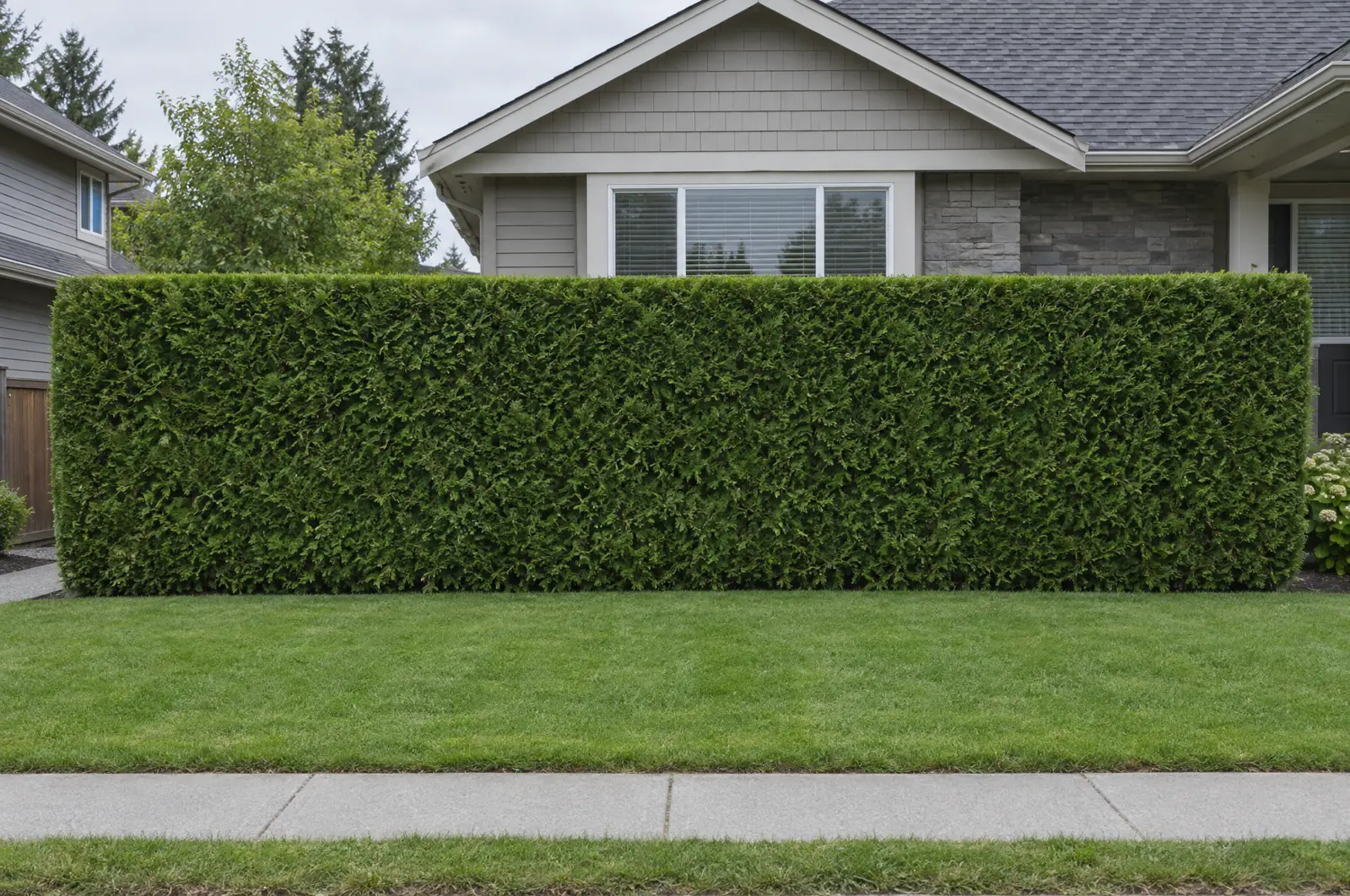
To trim a hedge, cut it so the bottom is a little wider than the top. That lets sun reach the lower branches. Trim soon after the spring flush of new growth, and again in mid-summer if it needs it. Cut only the soft, leafy growth, never into bare wood on evergreens. Skip big trims in late summer and fall. Then rake out every clipping.
What kind of hedge do you have?
Start here, because the type of plant decides almost everything else. Walk out and look at it.
- Evergreen hedges stay green all winter. Cedar, yew, juniper and boxwood are common ones.
- Formal leafy hedges drop their leaves in fall and take a flat, sheared shape well. Iowa State Extension names privet, alpine currant and barberry.
- Flowering hedges like lilac or forsythia are grown for their blooms. They need a gentler hand.
Most leafy shrubs don't like to be sheared flat. Iowa State says shearing them ruins their natural shape. It also cuts down the leaves and flowers. You end up with a mess of tiny shoots at the tips. So if your hedge is a row of lilacs, don't try to make it look like a box.
Got cedars? We wrote a full guide on when to trim cedar hedges. This post covers the how for every kind of hedge.
When is the best time to trim a hedge?
Trim soon after the new spring growth comes out. That's the short answer for most sheared hedges. Iowa State gives these months for Iowa. Spring often runs later in much of Canada, so watch your plant, not the calendar.
| Hedge type | First trim | Second trim |
|---|---|---|
| Formal leafy hedge (privet, barberry) | Just after the new spring flush (May in Iowa) | Mid-summer (July), if needed |
| Evergreen hedge | Just after the new flush (May to early June in Iowa) | Light trim in mid-summer, if needed |
| Spring-flowering hedge (lilac) | Right after it finishes blooming | Usually not needed |
| Summer-flowering shrubs (potentilla, Japanese spirea) | Late winter or early spring | Usually not needed |
Why wait on the lilacs? Iowa State says pruning a spring-flowering hedge while it's dormant cuts off many of its flowers. Trim right after the blooms fade, and it has time to set buds for next year.
Why shouldn't you trim a hedge in the fall?
A late cut wakes the plant up at the wrong time. Iowa State says pruning shrubs in August or early September can push out a late flush of growth. That soft growth may not toughen up before the cold. Then it gets hurt over winter.
Evergreens are the same. Iowa State says fall-pruned evergreens are more likely to get winter injury.
So in October, leave the shears in the shed. A few broken or dead twigs can come out anytime. The real trim waits for spring. Fall is the time to rake leaves out from under the hedge instead. That's part of a good spring and fall cleanup.
What tools do you need to trim a hedge?
For a short hedge, hand shears work fine. For a long row, a power hedge trimmer saves your arms. The Canadian Centre for Occupational Health and Safety (CCOHS) says to match the trimmer to the job. Think about:
- How tall and how long the hedge is
- The length of the cutter bar
- Single-sided or double-sided blades
- The weight and balance of the tool
- Where you'll plug in, or if you need a battery or gas model
Add safety glasses, gloves and a tarp. A string line and two stakes help if you want a dead-level top.
How do you trim a hedge safely?
A hedge trimmer is a fast, sharp tool. CCOHS lists these habits:
- Check the hedge first. Look for wires, metal posts or fence ties hiding inside.
- Stay dry. Don't use electric tools in the rain or on wet shrubs.
- Protect your eyes and face. Twigs fly.
- Keep the cord behind you. That way you won't cut it or trip on it.
- Use both hands. Don't reach too far.
- Skip the ladder. CCOHS says not to stand on ladders or chairs with a hedge trimmer. Use a long-reach trimmer for tall hedges.
- Power off to clear jams. Wait for the blades to stop, then use a brush, not your fingers.
Using gas? Don't refuel while the engine is hot. CCOHS says fuel can spill and start a fire.
Should you check for bird nests before you trim?
Yes, every time. Thick hedges are a favourite nesting spot. Environment and Climate Change Canada says the general nesting period can start as early as mid-March. It can run until late August.
Federal rules protect migratory bird nests that hold a live bird or an egg that can still hatch. Before you start, stand back and watch for a few minutes. If birds keep flying into one spot, leave that section alone. Come back to it once they've gone.
How do you shape a hedge, step by step?
- Clear the base. Pull sticks, toys and hoses out of the way. Lay a tarp along the side you'll cut first.
- Do the sides first. Start at the bottom and sweep the trimmer upward. Keep the blade flat to the hedge.
- Lean the sides in a little. The top should end up a bit narrower than the bottom.
- Cut the top last. Run a string line between two stakes if you want it level. Keep the blade at that height the whole way.
- Step back often. Every few metres, walk out to the lawn and look. Fix a wavy spot now, not after.
That lean matters more than you'd think. Iowa State says a hedge that's narrower on top lets the lower branches get the sun they need. That's how you get a hedge that's full from top to bottom. It also helps in a Canadian winter. Iowa State says the shape cuts down on snow piling up on top, which can break branches.
How much should you cut off a hedge?
Take the soft new growth and stop. On evergreens, this rule is firm. Iowa State says to prune evergreen shrubs back to green areas only. Cut into bare, brown wood and you leave a hole. On boxwood, yew and cedar, a hole can take five or more years to fill, and some never do.
Leafy hedges forgive more. But pick a height the plant can live with. Iowa State gives privet as an example. Trying to keep it under 3 feet (about 90 cm) is frustrating, because it grows so fast.
How often should you trim a hedge?
More than once a year if you want it sharp. Iowa State says most hedges need 2 to 4 trims a season, sometimes more. The tidiest evergreen hedges get trimmed almost every month.
Many light trims beat one big hack. Each pass only takes a little, so you never cut into bare wood. A natural, loose hedge can get by with fewer trims.
What if your hedge is badly overgrown?
It depends on the plant. Iowa State gives three paths:
- Leggy privet-type hedges can be cut back to 10 to 15 cm (4 to 6 inches) from the ground in late winter or early spring. Shear the new shoots often as they grow back.
- Overgrown lilacs and other many-stemmed shrubs can be fixed over 3 years. Each late winter or early spring, cut out the oldest stems at the ground, about a third at a time. Lilacs cut hard can skip blooming for 3 to 5 years.
- Boxwood, yew and most evergreens can't be cut back that hard. If they've grown too big, Iowa State says they often need to be replaced.
All of these hard cuts happen in late winter or early spring, not now.
How do you clean up after trimming a hedge?
Cleanup is half the job. Clippings left in the hedge turn brown and look bad. Here's a quick routine:
- Shake or brush clippings off the top of the hedge.
- Pull the tarp and dump it straight into a yard waste bag.
- Rake clippings out from under the hedge and the flower beds.
- Blow or sweep the walk, the driveway and the street edge.
- Check your city's yard waste rules before you set bags out.
Bag size, bundle length and pickup dates vary from city to city.
Can a local crew trim your hedge for you?
Yes. Golden Oak Lawn Care matches you with a vetted, insured local crew. They do the work. We stand behind it with the Golden Oak Guarantee.
Your crew handles hedge and shrub trimming from the ground or a short step. They check for nests, trim to the shape you want, and haul away the clippings. Many people add trimming and edging along the base, so the lawn line looks as sharp as the hedge.
We price every yard from satellite images, so no one needs to visit. Hedge length and height, gates and haul-away all change the price.
Want it handled? Get your price in 60 minutes, or call 1-866-904-LAWN.
Hedge Trimming Questions
Should a hedge be wider at the top or the bottom?
Wider at the bottom. Iowa State says that shape lets sun reach the lower branches, so the hedge stays full to the ground. It also sheds snow better.
Can I trim my hedge in October?
Only to snip out dead or broken twigs. Iowa State says late pruning can push out soft growth that gets hurt in winter. Save the real trim for spring.
Will my hedge grow back if I cut it too short?
Leafy hedges like privet usually do. Most evergreens don't. Iowa State says to cut evergreens back to green growth only, because bare holes may never fill in.
Is it safe to use a hedge trimmer on a ladder?
No. CCOHS says not to use a hedge trimmer on a ladder or a chair. Use a long-reach trimmer instead, or have a crew do it.
Sources: Iowa State formal hedges, Iowa State pruning times, Iowa State overgrown shrubs, CCOHS landscaping equipment, ECCC nesting periods, Migratory Birds Regulations FAQ.