Seasonal guide · Canada
Should You Rake Leaves Before Winter? How Much, When and How
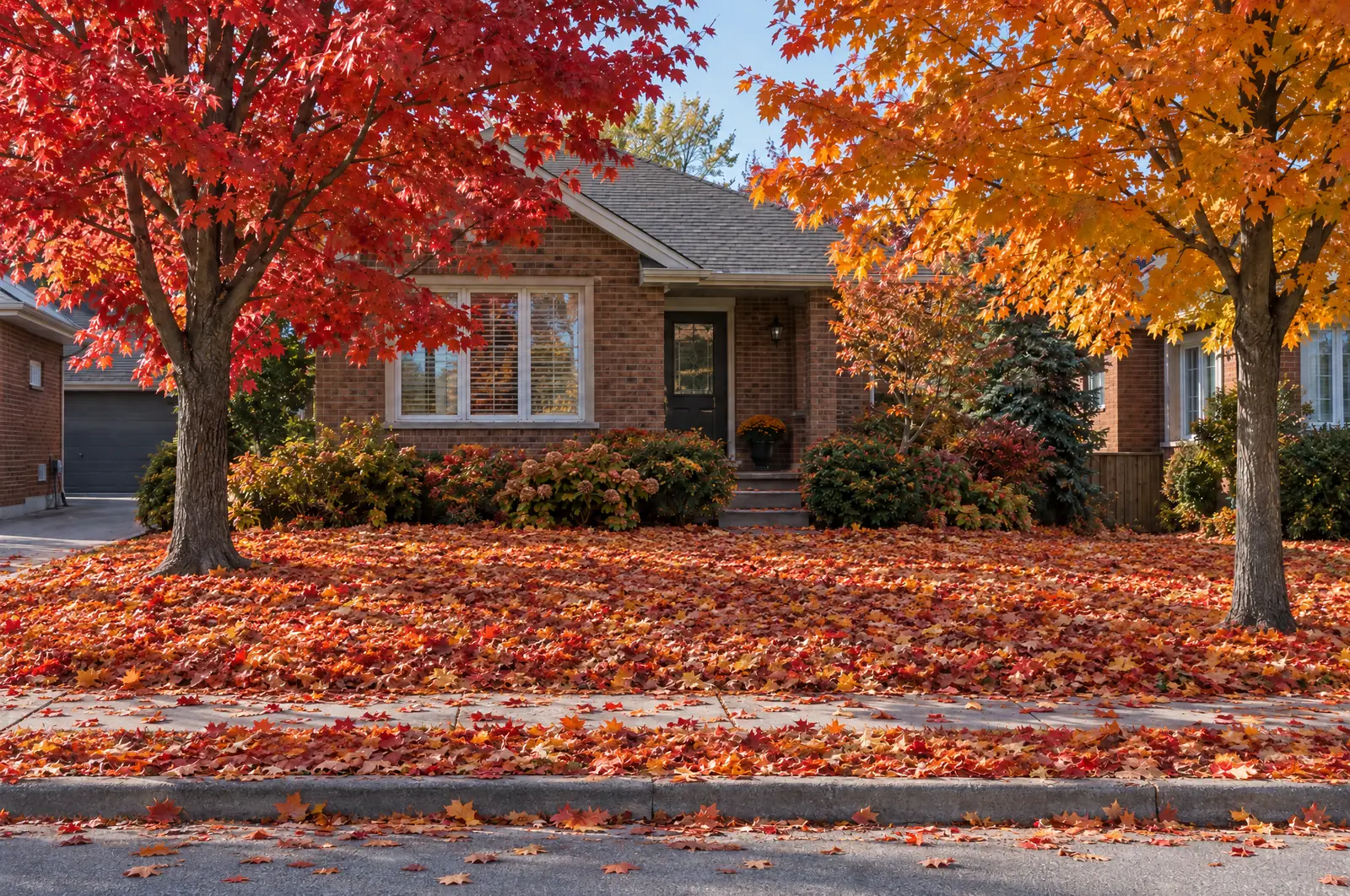
Yes, if the leaves hide most of your grass. A thick layer left on the lawn all winter can smother the grass and invite snow mould. You don't need to get every leaf, though. A light scatter can stay, and a medium layer can be chopped with the mower. In most of Canada, plan one last rake after your trees are bare and before the snow comes to stay.
Do you really need to rake every leaf?
No. Raking is about how much of the lawn is covered, not about a spotless yard. The University of Wisconsin Extension breaks it into three simple levels:
- About 20% covered: you can ignore them. They blow around, settle in and break down on their own.
- About 50% covered: you still don't need to rake. Run the mower over them so the bits settle between the grass blades.
- Grass barely shows: rake or remove at least half of them. Then mow up the rest and leave them on the lawn.
So the real question is how thick your leaves are. Walk out and look straight down. If you see plenty of green, relax. If you see a brown carpet, it's time to rake.
We covered the "leave the leaves" idea in more detail in should you leave leaves on your lawn. This post is about the raking part.
Why does a thick leaf layer hurt the lawn over winter?
Grass needs light, even late in the fall. A heavy layer of leaves blocks it. The University of New Hampshire Extension says a heavy layer can smother the grass or stop new growth in spring.
Moisture is the other problem. Wet leaves pack down into a flat mat. Then the snow sits on top for months. UNH says leaves left on the lawn can promote snow mould, which can damage grass in winter and early spring.
The University of Saskatchewan lists what snow mould likes. Two items on its list are lawns left long and matted over winter, and too many leaves left on the lawn in fall. Its advice is short: cut and rake the lawn before snow arrives.
Want to know what snow mould looks like in spring? Read our post on snow mould and fall cleanup.
Is it bad for nature to rake leaves?
Not if you put them in the right spot. UNH says that from a nature point of view, leaves don't have to be raked. But it also says that for a healthy lawn under trees, you should try to remove as many as you can before winter.
Both can be true at once. Rake the leaves off the grass, then use them somewhere else in the yard. More on that below.
When should you do the last rake before winter?
Do it late, but not too late. Plan your last rake for after most of your trees are bare and before the first snow that stays. If you rake too early, a new layer falls on top. If you wait too long, snow buries the leaves until spring.
Most yards need more than one pass. A big maple can drop leaves over a few weeks. Rake or mow them as they come, then do one final pass near the end.
Keep mowing too. Iowa State University Extension says to keep mowing until the grass stops growing. Grass like Kentucky bluegrass stops when daytime highs stay below 10 C (50 F). Your last mow and your last rake often happen in the same week. Not sure how often to cut this time of year? See how often you should mow in Canada.
What if the snow comes before you rake?
It happens a lot in Canada. An early snow can melt off in a few days. If it does, clear the lawn on the next dry day.
If the snow stays, leave it. UNH says you can wait until spring to rake. Just expect a few more problems on the lawn when the snow melts. Rake those spots once the lawn has dried out.
Should you rake or mow the leaves?
Mowing is easier when the layer is thin. UNH says a few passes with the mower often shred leaves into small pieces. It works well if you do it several times through the season.
Raking wins once the layer gets thick. UNH says that once a thick layer builds up, it's nearly impossible to get all the pieces down between the grass blades. At that point, raking is easier.
Here's a simple way to choose:
| What you see | What to do |
|---|---|
| A few leaves here and there | Leave them |
| About half the lawn covered, dry leaves | Mow over them |
| Grass barely shows, or leaves are wet and matted | Rake, then mow what's left |
Iowa State lists three ways to lift leaves off the lawn: raking, blowing, or the bag on your mower. Pick whatever suits your yard. For tips on chopping leaves, see mulching leaves with a lawn mower.
How do you rake leaves without hurting the lawn?
Raking is simple, but a few habits save your grass and your back:
- Wait for a dry day. Dry leaves are lighter and slide off the grass. Wet ones clump and tear at it.
- Use a leaf rake. The wide one with springy tines. A stiff garden rake digs into the lawn.
- Pick up sticks first. Walk the yard and grab sticks, toys and pine cones.
- Work with the wind. Rake the same way the wind blows, not against it.
- Rake onto a tarp. Drag the tarp to your beds or bags. It beats lifting armfuls.
- Use short strokes. Keep your back straight and switch hands now and then.
- Check the edges. Pull leaves out from the base of hedges, fences and the house.
Where should the raked leaves go?
Raked leaves are useful. Wisconsin Extension says you can use them in compost or as winter mulch. You can also save them until spring to mulch your vegetable or flower gardens.
Iowa State gives two more options: add them to a compost pile or send them to a composting facility. If your city collects leaves in the fall, check its page for this year's dates.
One rule to follow everywhere: keep leaves off the street. The City of Kitchener says never to rake leaves onto a storm drain. Leaves on the street or sidewalk can be a hazard for people walking and biking. They can also cause flooding if a storm drain gets blocked.
Should you rake leaves from a sick tree?
Yes. Did your tree have spotty or blotchy leaves this year from a fungus? Then rake those leaves up, even if you leave others in place. Wisconsin Extension says fallen leaves from trees with serious leaf disease can carry spores that infect next year's leaves.
It suggests getting rid of them, for example by burying them or by hot composting. Don't spread them as mulch under the same tree. Our partner crews don't spray, and Golden Oak doesn't give advice on tree or lawn treatments.
Can a local crew rake the leaves for you?
Yes. Golden Oak Lawn Care matches you with a vetted, insured local crew in your city. They do the work. We stand behind it with the Golden Oak Guarantee.
A fall cleanup clears the leaves off your lawn, pulls them out from the edges, and moves them to your beds or bags and hauls them, your choice. Pair it with weekly lawn mowing and your crew chops the thin leaf drops as the season goes. Then the final cleanup has less to do.
We price every yard from satellite images, so no one needs to visit. Lawn size, leaf volume, slopes, gates and haul-away all change the price.
Want it handled? Get your price in 60 minutes, or call 1-866-904-LAWN.
Raking Leaves Questions
Is it OK to not rake leaves at all?
Yes, if only a few are down. Wisconsin Extension says about 20% cover can be ignored. If leaves hide most of the grass, rake at least half of them before winter.
Can I wait until spring to rake leaves?
You can, but the lawn may pay for it. Leaves left under snow can smother grass and promote snow mould. Rake in the fall if you can, and in spring once the lawn is dry.
Should I rake leaves when they're wet?
Wait for a dry day if you can. Wet leaves are heavy, clump together and pull at the grass. If snow is coming soon, rake them wet rather than leave a thick mat.
Is it better to rake or mow leaves?
Mow when the layer is thin and dry. Rake when the grass barely shows. Many yards need both: rake off the thick part, then mow the rest.
Sources: University of Wisconsin Extension, University of New Hampshire Extension, University of Saskatchewan snow mould, Iowa State fall lawn care, City of Kitchener leaf collection.