Seasonal guide · Canada
Should You Leave Leaves on Your Lawn Over Winter?
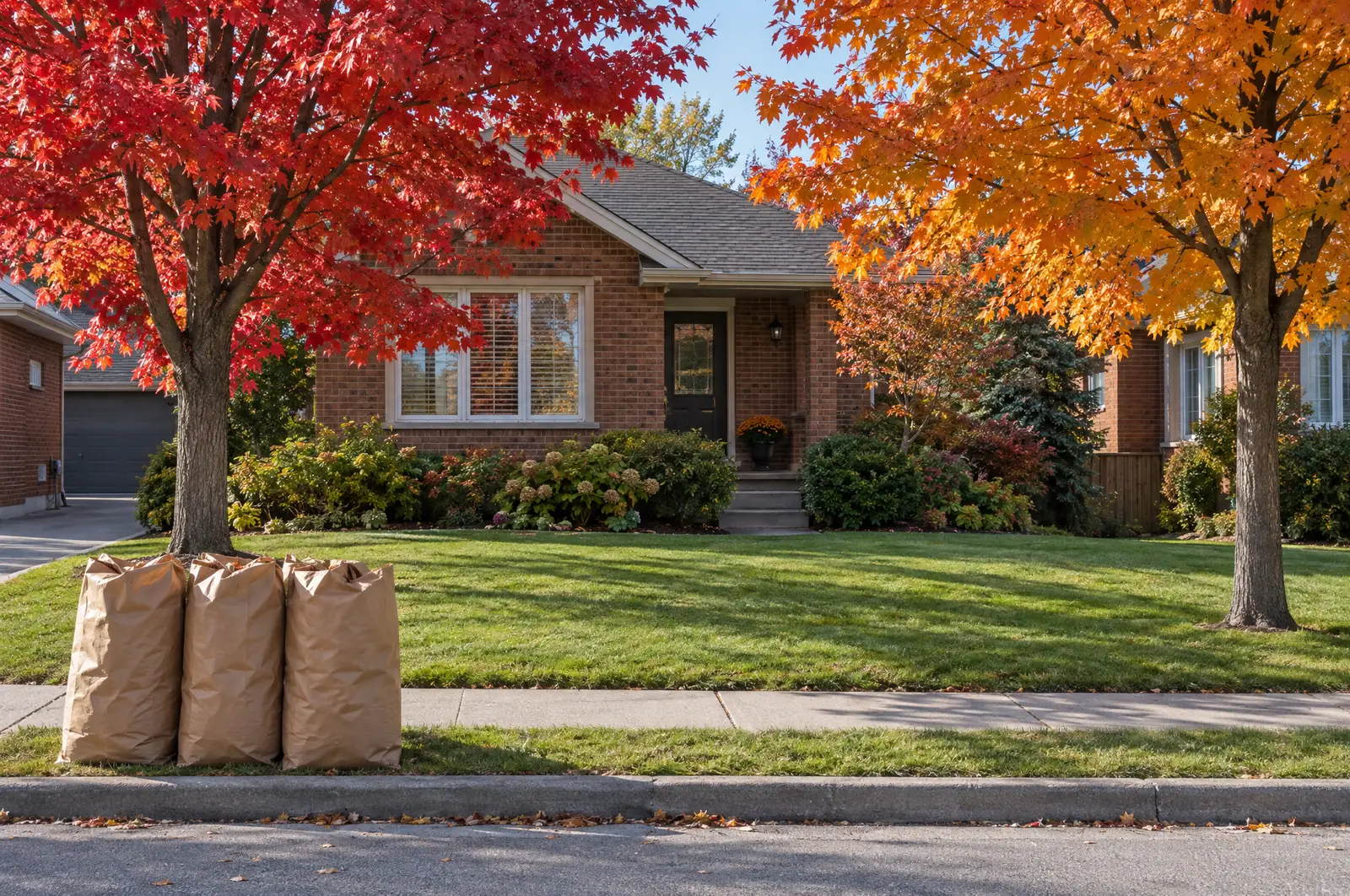 Illustration
Not a thick layer, no. Whole leaves left on the grass all winter block light and trap moisture. That can thin the lawn and invite snow mould. A thin scatter is fine, and so are leaves chopped small with a mower. The rest should go somewhere else. In most Canadian yards, the best spot is your garden beds and under your shrubs.
What does "leave the leaves" really mean?
You've probably heard the phrase. Some Canadian cities now push it. The City of Waterloo has a whole page called "Leave the leaves." It says leaves left on the ground over winter help pollinators, soil and small urban wildlife.
But read the fine print. Waterloo doesn't say to leave a blanket of leaves on the grass. It lists three ways to do it:
- Rake leaves onto your garden beds to protect them over winter.
- Mulch leaves into your lawn with the mower.
- Leave light layers under trees and shrubs for wildlife.
So "leave the leaves" means keep them in your yard. It doesn't mean leave them where they fell on the lawn. The grass and the garden want different things.
Why can't a thick layer of leaves stay on the grass?
Grass is still alive under there. It keeps working right up until the snow. Iowa State University Extension says a leaf layer stops grass from making and storing food before winter. It can also block light and cause patches to die back.
Purdue University's turf specialist puts it more bluntly. Whole leaves left on top will smother the grass. The wet layer also holds humidity, and that leads to snow mould. At best, the lawn thins out. At worst, the grass dies right down to the ground.
The University of Saskatchewan lists extra leaf litter left in fall as one of the things that favour snow mould. Its advice is short: cut and rake the lawn before snow arrives. We cover the full story in our post on snow mould and fall cleanup.
How many leaves on the lawn is too many?
Here's a number you can use. University of Missouri Extension says it's OK to have 10% to 20% of your lawn covered with a thin layer of leaves. More than that, and you risk smothering the grass.
That covers a lot less than most people think. Here's a quick way to check:
- You see green almost everywhere. You're fine. Leave it or run the mower over it.
- You see patches of solid brown. Chop them with the mower or rake them off.
- You see little or no grass. Iowa State says to remove the leaves. A mower alone won't handle that much.
Check the shady corners and the spots under big trees. That's where leaves pile up deepest and stay wet longest.
Is it OK to leave chopped leaves on the lawn?
Yes, if they're small. The University of Maryland Extension says you can shred leaves in place with a mower. The pieces filter down into the lawn and break down.
UConn Extension gives a simple test. After each mulching pass, no more than 20% of the lawn should still be covered by leaves. If you can see lots of grass between the bits, you're done.
Some leaves chop easier than others. UConn says ash and maple leaves are harder to mulch than oak. Expect more passes in a maple yard. Our guide to mulching leaves with a lawn mower walks through how to do it step by step.
Where should the extra leaves go instead?
Maryland Extension calls moving leaves onto planting beds the best approach to support wildlife. Missouri Extension agrees. It says to gently rake extra leaves into your flower beds as free mulch.
Good spots for leaves in most yards:
- Flower and shrub beds
- Under trees and along the back of the yard
- The base of shrubs, as a light layer
- A compost pile
- A neighbour's garden, if they want them
That last one is real advice. Maryland says to share bagged leaves with neighbours for their beds, so helpful insects stay in the area. If you still have too many, put the extra out for your city's yard waste pickup.
Where should leaves never go?
Some places cause real trouble. The City of Kitchener asks people not to rake or blow leaves onto storm drains, sidewalks or bike lanes. A blocked storm drain can cause flooding. Wet leaves on a walk or driveway get slippery too. Keep them off hard surfaces and pull them back from your foundation.
Should you chop the leaves you put in garden beds?
Here's where the lawn and the garden split. On the grass, you want leaves chopped small. In the beds, you want them whole.
Missouri Extension says to leave bed leaves intact, because shredding them may kill hibernating critters. Many native bees, butterflies and moths spend the winter in leaf litter, in dead plant stems or just under the soil.
So the rule of thumb is easy to remember. Chop what stays on the grass. Keep whole leaves in the beds. Don't run the mower through a pile you just raked into a garden.
When should you clear leaves out of the beds in spring?
Later than you'd guess. Missouri Extension says to hold off on spring cleanup until temperatures stay above 10 C (50 F). Kansas State University Extension adds a detail: wait until daily air temperatures stay above that mark for at least a week.
K-State explains why. When you bag or shred that litter to haul away, you remove the next generation of insects before they come out.
The lawn is different. UConn says leftover leaves on the grass slow spring green-up. An early spring cleanup of the lawn helps it grow. So in spring:
- Clear any leaves that blew back onto the lawn as soon as it dries out.
- Leave the beds alone until the warm days hold steady.
- Then tidy the beds and let the leaves work in as mulch, or bag the extras.
Waterloo points out one bonus. When you leave leaves in the beds, you have fewer leaves to manage in spring.
What if the leaves are still falling when the snow comes?
Leaves don't always finish falling before winter shows up. A surprise snowfall can bury a lawn half covered in leaves.
Plan for one last pass as close to the first lasting snow as you can. Mow or rake the lawn clear, then let the late leaves land in the beds. If snow catches you early, clear the lawn on the next mild, dry day. Grass under a thin, chopped layer will be fine. Grass under a wet, matted pile is the one to worry about.
Weeds or lawn disease in spring are a separate topic. Our partner crews don't spray, and Golden Oak doesn't give advice on chemicals.
Can a local crew handle the leaves for you?
Yes. Golden Oak Lawn Care matches you with a vetted, insured local crew in your city. They do the work. We stand behind it with the Golden Oak Guarantee.
A fall cleanup clears the lawn, moves leaves into your beds if you want them there, and bags or hauls the rest. Many people pair it with weekly mowing, so the mower chops thin leaf drops as the season goes. That's part of the Worry-Free Lawn Season, where the same crew comes back every visit and texts you a photo when the job is done.
We price every yard from satellite images, so no one has to visit. Lawn size, leaf volume, gates, slopes and haul-away all change the price.
Want it handled? Get your price in 60 minutes, or call 1-866-904-LAWN.
Leaving Leaves Questions
Will leaves on my lawn kill the grass over winter?
A thick, wet layer can. Purdue's turf specialist says whole leaves smother grass and hold moisture that leads to snow mould. A thin scatter or chopped leaves won't hurt it.
Is leaving the leaves better for the environment?
Yes, when they go in the right place. Bees, butterflies and moths spend winter in leaf litter. Put the leaves in your beds and under shrubs, and keep the lawn mostly clear.
Should I rake or mow the leaves on my lawn?
Mow them if the layer is thin and dry. Rake them if you can barely see the grass. Either way, aim to see plenty of green when you're done.
When can I clean the leaves out of my garden beds?
Wait until spring days stay above 10 C (50 F) for about a week. That gives overwintering insects time to come out. Clear the lawn earlier than the beds.
Sources: City of Waterloo leave the leaves, University of Missouri Extension, K-State Research and Extension, University of Maryland Extension, Purdue University, Iowa State fall lawn care, University of Saskatchewan snow mould, UConn Extension, City of Kitchener leaf collection.