How-to
Can You Mulch Leaves With Your Lawn Mower?
 Illustration
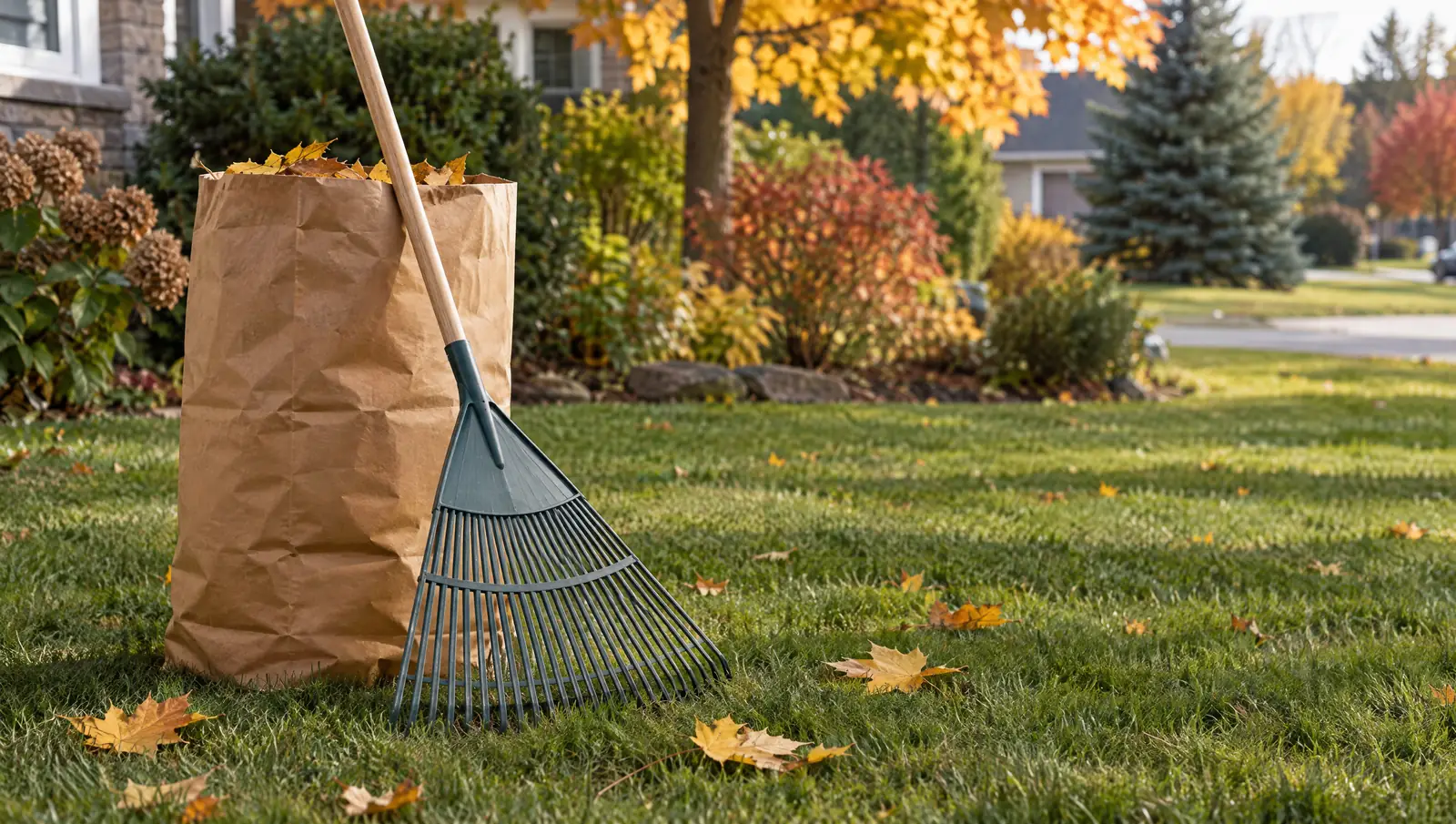
Yes. You can mulch leaves with your lawn mower, and the bits can stay right on the lawn. Mow when the leaves are dry and the layer is thin. Go over the lawn every week or so during the leaf drop, not once at the end. A regular mower works too. Set the deck high and make a few passes. Rake any spot where the leaves are too thick to chop.
Is it OK to leave mulched leaves on the lawn?
Yes, as long as the pieces are small. Purdue University tested this. Its turf team shredded leaves into grass and found no harm to the colour or quality of the lawn. It didn't use up the nitrogen in the soil either.
UConn Extension adds two more points. Mulched leaves add organic matter to the top of the soil. They also don't build up thatch, which is a common worry.
Some Canadian cities say the same. The City of Kitchener tells residents to empty the mower's bag and mow the leaves again. That turns them into mulch that feeds the lawn. Belleville's leaf page says you can mulch or compost leaves for your garden and flower beds.
Don't expect miracles, though. Purdue's turf specialist said the extra nutrients are probably small. The real win is less raking and fewer bags.
When is mulching leaves a bad idea?
Mulching fails when the leaves are thick, wet or left too long. Whole leaves on top of the grass are the problem. Purdue says they smother the lawn by blocking the light it needs.
A heavy layer also holds in moisture. Purdue links that to snow mould, which can thin your lawn or kill patches right down to the dirt. The University of Saskatchewan lists leftover fall leaves as one cause of snow mould too.
So skip the mower and grab a rake when you see:
- Deep piles. Purdue warns that 15 to 20 cm (6 to 8 inches) of leaves all at once just won't mulch.
- Wet leaves. Purdue says wet leaves won't break up, and the mower won't push through them.
- Mats with no grass showing. Iowa State University Extension says to clear leaves anywhere you can barely see grass.
How do you mulch leaves with a lawn mower?
Here's the routine that works on most Canadian lawns. Each step comes from the extension pages listed at the bottom.
- Wait for a dry day. UConn Extension says to mow leaves only when the grass is dry. Morning dew counts as wet, so go after lunch.
- Walk the yard first. Pick up sticks, pine cones and toys before you mow.
- Set your height. Never cut off more than one third of the grass blade at once. UConn Extension and Iowa State both give that rule.
- Mow over the leaves. Keep going until the pieces are small enough to drop down into the grass.
- Go again if needed. Make a second pass in a different direction where bits still sit on top.
- Check your work. UConn Extension says no more than 20% of the lawn should be covered by leaves after each pass. If you can still see plenty of green, you're done.
UConn Extension also suggests a dust mask. Dry, chopped leaves throw up a lot of fine dust.
Do you need a mulching mower?
No, but it helps. A mulching mower, or a mulching kit for your mower, keeps the leaves under the deck longer. Iowa State says it chops leaves into small pieces that fall down between the grass blades.
A regular mower can still do the job. UConn Extension gives this method:
- Raise the deck to its highest setting.
- Make several passes over the area.
- Go in a crisscross pattern, so each pass hits the leaves from a new angle.
If you have a bagger, you have a third choice. Leave the bag on and you collect chopped leaves instead of whole ones. Those bits take up far less space, and they make great mulch for your beds. More on that below.
How often should you mulch leaves in the fall?
Often. This is the part most people miss. Iowa State says mulching works best when the leaf layer is thin and dry, so mow often through the fall. UConn Extension says leaf mulching needs more frequent mowing than usual.
Why? The bits need to settle down between the grass blades. They shouldn't sit on top and cover them. The grass still needs sunlight while it's growing.
A good plan is once a week during the big drop. Waiting for every leaf to fall and then doing one big mow is the most common mistake. By then the layer is too deep.
Keep mowing while the grass keeps growing. Iowa State says cool-season grass stops growing when daytime highs stay below 10°C (50°F). Your last mulching pass can double as your last cut of the year. For more on timing, see our guide on when to stop mowing.
Do some leaves mulch better than others?
Yes. UConn Extension says ash and maple leaves are harder to mulch than oak leaves. That matters in Canada, where maples line a lot of streets.
If you have big maples, plan on more passes. Keep the layer thin by mowing more often. Get to them on the first dry day after rain.
Don't worry if you see a light dusting of tiny brown bits after you mow. UConn Extension says those pieces last a few days and then sift down into the grass.
Can you use mulched leaves in garden beds?
Yes, and it's one of the best uses for them. UConn Extension suggests using the mower's bag to collect the chopped leaves. Then spread them around your plants.
Its guide gives simple numbers:
- Spread the leaves 10 to 15 cm (4 to 6 inches) deep around plants.
- Leave about 15 cm (6 inches) of bare space around the base of each plant.
- Whole leaves work in beds too, if you'd rather not chop them.
Leaving some leaves in beds helps wildlife. UConn Extension says many helpful insects spend the winter in leaf litter. Belleville's leaf page says leaving leaves in place in late fall is good for pollinators, insects and wildlife.
So here's a simple split. Mulch the leaves into the lawn. Bag a few loads and tuck them into the beds. Keep the thick mats off the grass.
What should you do before the snow?
Do one last check. UConn Extension says a thick layer of leaves left on the lawn over late fall and winter can lead to snow mould. The University of Saskatchewan's advice is to cut and rake the lawn before snow arrives.
Leaves that are left over also slow the lawn down in spring. UConn Extension says they delay green-up, and an early spring cleanup helps the grass get going.
Keep leaves out of the street, too. Kitchener asks residents never to rake leaves onto a storm drain. It also says not to blow them onto sidewalks or bike lanes. Blocked drains can flood your street. If you still have extra leaves, check your city's drop-off or pickup options. Kitchener, for example, runs eight leaf drop-off sites from October 9 to December 4, 2026. Our Kitchener lawn care page covers more about that city.
One note on lawn problems: our partner crews don't spray, and we don't give advice on chemicals.
Can a crew mulch your leaves for you?
Yes. Mulching only works if someone mows every week through the fall. That's hard to keep up when the days get short.
Golden Oak Lawn Care matches you with a vetted, insured local crew in your city. They do the work. We stand behind it with the Golden Oak Guarantee.
Your crew can keep up your lawn mowing through the leaf drop and the last cut. If the leaves get ahead of you, book a fall cleanup to clear the thick spots, tidy the beds and bag the rest. You keep the same crew every visit, and they text you a photo when the job is done.
We price every yard by its size from satellite images, so no one has to come by. The price depends on lawn size, how often you want visits, slopes, gates, how many leaves you have and whether you want them hauled away. Book the season through the Worry-Free Lawn Season and your first cut is free. Want the full fall to-do list? Read our fall lawn cleanup checklist.
Want it handled? Get your price in 60 minutes, or call 1-866-904-LAWN.
Mulching Leaves Questions
Is it better to mulch leaves or bag them?
Mulching is less work and keeps the leaves on your property. Purdue found it didn't hurt the lawn's colour or quality. Bag or rake only the deep, wet piles that won't chop up.
Can I mulch wet leaves?
Not well. Wet leaves don't break up, and they clump under the mower. Wait for a dry afternoon, or rake the wet mats off the grass.
How many leaves can my mower handle at once?
Less than you'd think. Purdue says 15 to 20 cm (6 to 8 inches) all at once won't work. Mow every week or so, so the layer never gets that deep.
Will mulched leaves cause thatch?
No. UConn Extension says research shows mulched leaves add organic matter to the soil surface. They don't build up thatch.
Sources: Purdue University leaf mulching study, UConn Extension leaf disposal and mulch mowing, Iowa State fall lawn care, University of Saskatchewan snow mould, City of Kitchener leaf collection, Belleville leaf and yard waste.