Seasonal guide
Fall Lawn Cleanup Checklist for Canadian Homeowners
 Illustration
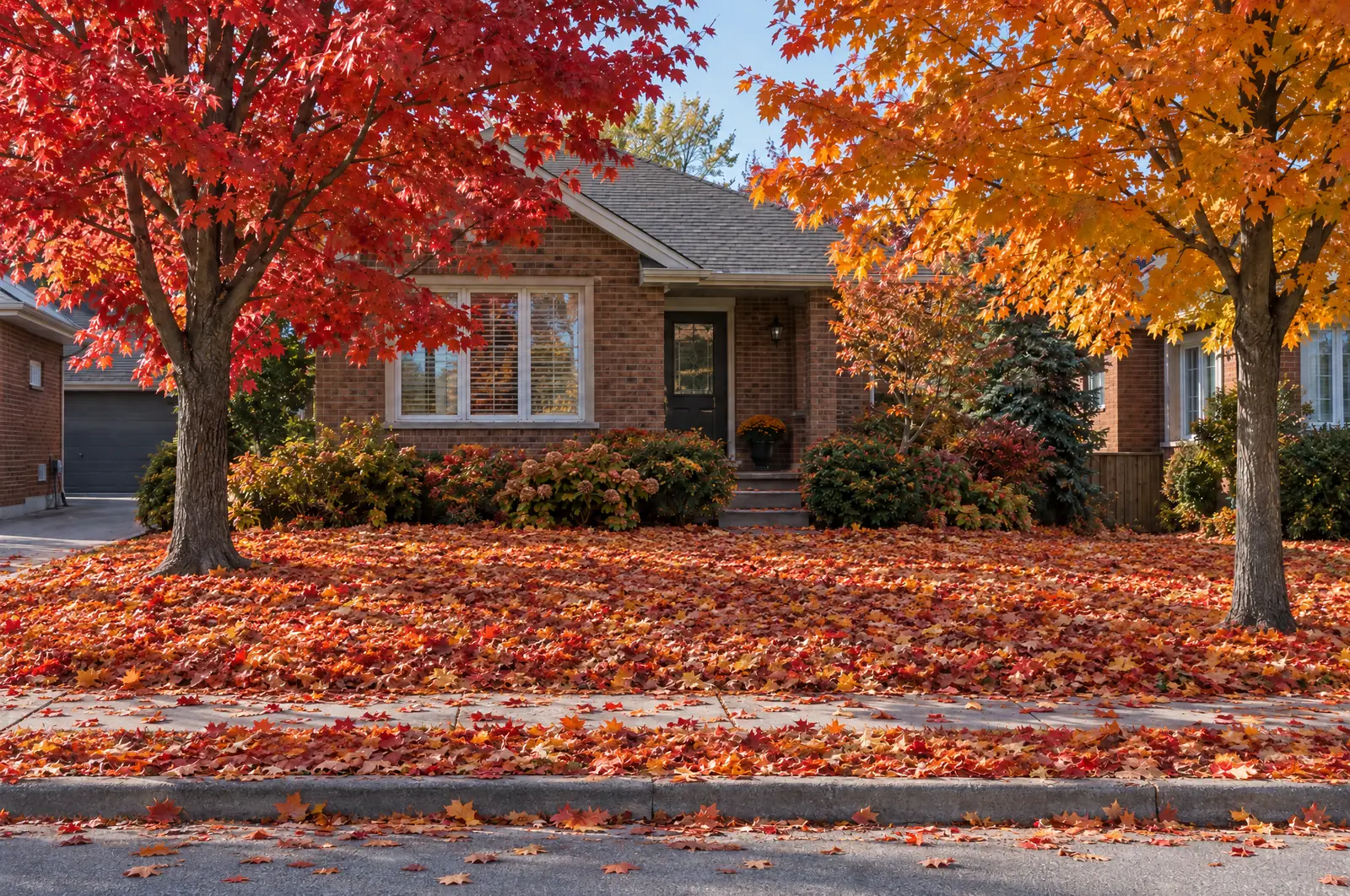
A good fall lawn cleanup in Canada comes down to five jobs. Keep the leaves off the grass. Keep mowing until the grass stops growing, then cut it a bit shorter. Leave most hedge pruning for spring. Tidy the beds and pick up sticks. Bag everything the way your city wants. Do it all before the first snow sticks, because leaves and long grass under snow invite snow mould.
When should you do your fall yard cleanup?
Start when the leaves start to drop, and finish before the snow stays. That window moves a lot across Canada.
Here's an example from Environment and Climate Change Canada's long-term normals. Sudbury's first fall frost comes around October 1 on average. Belleville's comes around October 13. Frost doesn't end your cleanup, but it tells you winter is on its way.
Most yards need two or three rounds, not one big day:
- Early fall: clear the first leaves and keep up the mowing.
- Mid fall: the big leaf drop, bed cleanup and sticks.
- Late fall: the last cut and the last leaves, just before snow.
What goes on a fall lawn cleanup checklist?
Here's the full list. Work top to bottom. Each item is explained below.
- Walk the yard and pick up sticks, toys and anything the mower could hit.
- Rake, blow or mulch the leaves off the grass. Repeat as they fall.
- Keep mowing while the grass still grows.
- Drop the mower a notch for the last few cuts.
- Clear leaves off walks, the driveway and the curb.
- Cut back tired perennials and pull out dead annuals.
- Leave most hedge and shrub pruning for spring. Snip only dead or broken branches.
- Bag leaves and trimmings in paper bags, the way your city asks.
- Empty and coil the garden hose before the first hard freeze.
- Do one last pass of leaves right before the snow.
How often should you clear leaves off the lawn?
More often than you'd think. Iowa State University Extension says a thick leaf layer blocks light. Then the grass can't make and store food before winter, and patches can die back.
A good rule is to clear leaves anywhere you can't see much grass. Every week or so during the big drop works for most yards.
Can you just mow over the leaves?
Yes, if the layer is thin. A mulching mower chops leaves into small bits that fall down between the grass blades. The same extension page says it works best when the leaves are thin and dry, so mow often through the fall. If the leaves are thick, mow over that spot more than once, or rake it.
Wet, deep piles don't mulch well. Those need a rake or a blower.
Do you have to pick up every leaf?
No. Some cities say leaves help. Belleville's leaf page says leaving leaves in place in late fall is good for pollinators, insects and wildlife. It also says you can mulch or compost them for your garden beds.
So here's the middle path. Leave a thin layer in the flower beds and under shrubs. Get the thick mats off the grass, the walks and the driveway.
How short should the last cut of the year be?
A little shorter than summer, but not scalped. Iowa State University Extension says to lower your mowing height in mid to late September. It moves from 7.5 to 9 cm (3 to 3.5 inches) down to 6 to 7.5 cm (2.5 to 3 inches).
Two more rules from the same page:
- Never cut off more than one third of the grass blade at once.
- Keep mowing until the grass stops growing. Cool-season grass stops when daytime highs stay below 10°C (50°F).
For the last cut, aim for around 6 cm (2.5 inches). If the grass is long, bring it down over two cuts, so you don't take off more than a third at a time. Want the full story on timing? Read our guide on when to stop mowing in Sudbury. The same rules work in most of Canada.
One more tip: Greater Sudbury tells residents to sharpen mower blades once a year. A dull blade tears the grass. Fall is a good time to get it done before you store the mower.
Why does long grass and leftover leaves matter over winter?
Snow mould. The University of Saskatchewan says snow mould comes from fungi that like cold, wet conditions. You spot it after the snow melts in spring.
It lists a few things that make snow mould more likely:
- Lawns left long and matted over winter
- Lots of leaves left on the lawn in fall
- Spots where snow gets piled up
Its advice is short: cut and rake the lawn before snow arrives. That's why the last round of leaves and the last cut matter so much. Try not to pile shovelled snow on the same patch of lawn all winter either.
If you see mould or weeds in spring, note that our partner crews don't spray, and we don't give advice on chemicals.
Should you trim hedges and shrubs in the fall?
Mostly no. This surprises a lot of people. Iowa State University Extension says not to prune leafy shrubs in late summer. Cuts in August or early September can push out new growth. That soft growth doesn't have time to toughen up before the cold, so it gets hurt over winter.
The same page says:
- Avoid heavy hedge pruning after mid-summer.
- Avoid pruning evergreen shrubs, like cedars and junipers, in the fall. Prune them in late March or early April.
- Dead, broken and diseased branches can come off any time of year.
So in fall, just snip out broken and dead branches. Save the real shaping for spring. That's when our partner crews book most hedge and shrub trimming.
How should you bag leaves and yard waste?
Every city has its own rules, so check your city's yard waste page first. Still, some rules show up in a lot of places:
- Use paper yard bags. Sudbury won't take leaves in plastic bags, and Belleville's depot won't either.
- Bag leaves dry. Sudbury says dry leaves weigh less and are easier on the bag. It caps each bag at 18 kg (40 lb).
- Don't use the green bin for leaves unless your city says you can. Belleville's green bin doesn't take yard waste.
- Keep leaves out of the road. Leaves in the gutter can clog storm drains when it rains.
Pickup schedules vary a lot too. Sudbury picks up yard trimmings all year, every other week. Belleville does one fall pickup by zone. Our Belleville yard waste guide shows how to plan a cleanup around a single pickup day.
Can you hire someone for a fall cleanup?
Yes. Fall cleanup is a lot of raking, bending and hauling, and the leaves don't wait for your weekend. Plenty of people hand off the big rounds and do the small stuff themselves.
Golden Oak Lawn Care matches you with a vetted, insured local crew in your city. They do the work. We stand behind it with the Golden Oak Guarantee.
Your crew can do a fall cleanup that clears the leaves, tidies the beds and bags it all. They can also keep up your lawn mowing through the last cut. You keep the same crew every visit, and they text you a photo when the job is done.
We price every yard by its size from satellite images, so no one has to come by. A cleanup price depends on lawn size, how many leaves you have, slopes, gates, beds and whether you want it hauled away. You get your price by text in 60 minutes. Book the season through the Worry-Free Lawn Season and your first cut is free. Have more questions? Our FAQ page covers how it works.
Want it handled? Get your price in 60 minutes, or call 1-866-904-LAWN.
Fall Lawn Cleanup Questions
Is it bad to leave leaves on the lawn all winter?
A thick layer is. It blocks light, so the grass can't store food before winter. The University of Saskatchewan also links leftover leaves to snow mould. A thin layer in the flower beds is fine.
How short should I cut my grass before winter?
Around 6 cm (2.5 inches) works well. Iowa State University Extension suggests 6 to 7.5 cm (2.5 to 3 inches) in fall. Never cut off more than one third of the blade at once.
Should I trim my cedar hedge in the fall?
Best to wait. Fall-pruned evergreens are more likely to get winter damage. Prune them in late March or early April. You can snip dead or broken branches any time.
Can I put leaves in plastic bags?
Many Canadian cities say no. Sudbury and Belleville both turn away leaves in plastic bags. Use paper yard bags, and check your own city's rules before pickup day.
Rules change, so check with your city before you plan. Sources: Iowa State fall lawn care, Iowa State pruning times, University of Saskatchewan snow mould, Greater Sudbury lawn care, Sudbury yard trimmings bags, Belleville leaf and yard waste, Belleville green bin, Sudbury climate normals, Belleville climate normals.