Seasonal guide · Lethbridge, AB
Chinooks and Your Lawn in Lethbridge: How to Get Ready for Dry Winter Winds
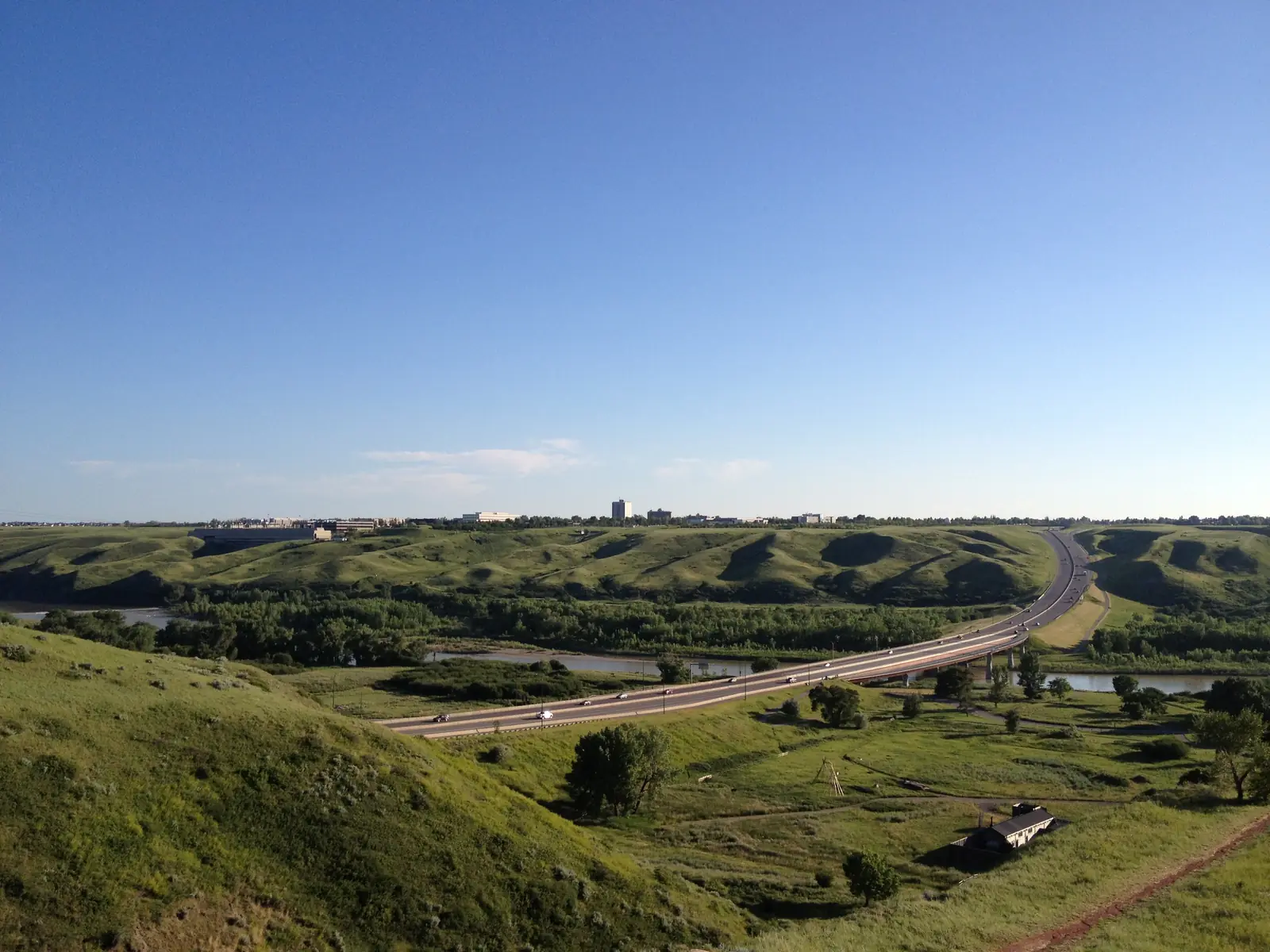
Chinooks are warm, dry winter winds. In Lethbridge they melt the snow fast and pull moisture out of your lawn and hedges, so the ground often sits bare and dry. That can leave brown patches and brown cedars in spring. The fix starts now: give the lawn and evergreens a deep drink before freeze-up, keep mowing at 7.5 to 10 cm (3 to 4 inches), and clear the leaves. In a long bare, dry spell, water at midday when it's above about 4 °C.
What does a chinook do to a Lethbridge lawn?
The City's own nature guide spells it out. The Helen Schuler Nature Centre says Lethbridge's warm winter days come from chinook winds. It lists what they bring: fast temperature change, melting snow, moisture loss and strong warm winds all winter.
That last part is the problem for your yard. Snow is a blanket. It keeps grass and roots covered and slowly feeds water into the soil. A chinook can strip that blanket off in a day. Then the wind keeps drying the ground while the grass sits dormant and can't drink much.
The wind even shapes the land here. The same guide says the coulees line up with the direction of the strongest winds in the region. Your yard feels that same wind all winter.
How often is a Lethbridge lawn bare in winter?
More than most people guess. Environment and Climate Change Canada keeps 30 years of records for the Lethbridge airport station. Here's what January looks like on average:
| Lethbridge, January (1981 to 2010 normals) | Average |
|---|---|
| Daily high | 0.1 °C |
| Days above 0 °C | 19.4 |
| Days above 10 °C | 3.4 |
| Days with 1 cm or more of snow on the ground | 17.3 |
| Snow depth | 4 cm |
| Precipitation | 13.5 mm |
So in a normal January, your lawn is bare for about two weeks. The record January high is 17.4 °C. February's is 21.8 °C. The record January low is minus 42.8 °C. Wind is strongest in December and January, and it blows mostly from the west.
That swing is what makes a Lethbridge winter tough on grass. It's not just cold. It's warm, dry, windy and bare, then frozen again.
Which parts of my yard dry out first?
Sun and wind pick the spots. Here's where to look:
- South and west sides. Colorado State University Extension, which deals with the same dry, open winters, says lawns facing south or west are more at risk.
- Slopes and high spots. Alberta Agriculture says high spots and south-facing slopes need more water than the rest of the lawn.
- Grass next to walls and fences. CSU says reflected heat from buildings, walls and fences adds to the damage.
- Windy, open yards. CSU says windy sites dry out faster and need more water.
- New lawns. CSU says new sod or seed is the most likely to get hurt.
You can see this on the coulees. The nature guide says south and southwest slopes get the hot sun and the dry wind. They end up almost desert-like, with a lot of bare soil.
Should I water my lawn in the fall in Lethbridge?
Yes, until the ground freezes. A lawn that goes into winter with moist soil handles a chinook much better than a dry one.
The City gives a simple rule in its Water Wednesday tips. In summer, a lawn needs 2.5 to 5 cm of water a week. Come fall, that drops to about 5 cm every few weeks. The City says to water in the morning in the fall. Evening water can sit in the cold overnight and lead to fungus problems.
The City also says to skip watering if the daytime high is below freezing. Southern Alberta wind can blow your sprinkler water away, so pick a calm morning.
Right now, Lethbridge is on voluntary water conservation, not a set watering schedule. The City asks everyone to limit outdoor water use. A few deep soaks in fall fit that better than lots of light ones.
What if my yard backs onto a coulee?
Go easy. The City's nature guide says coulee slumping is often linked to lawn watering on nearby homes. In 1996, part of Stafford Coulee in north Lethbridge was filled in to protect houses on a sliding slope. Water enough to wet the root zone, then stop. Don't let it run toward the edge.
Should I water my lawn during a winter chinook?
Sometimes. Most established lawns are fine. But after a long, bare, dry stretch, a drink helps. Here's the CSU Extension guidance:
- Water only when the air and soil are above 40 °F (about 4 °C).
- Only water where there's no snow cover.
- Water at midday, so it soaks in before it can freeze at night.
- In a long dry spell, about once or twice a month is enough.
Use a hose and a portable sprinkler, then drain the hose and bring it inside. Don't water frozen ground. The water just runs off and can freeze into ice.
Ice is a problem too. CSU says a solid sheet of ice that sits on a lawn for more than a month can smother the grass. If meltwater keeps pooling in one low spot, point your downspout somewhere else.
The tricky part is that dry damage hides. CSU says hurt plants can look fine in spring, then weaken and die when summer heat arrives. So a dry winter can show up as a weak lawn in July.
How should I mow before winter?
Keep mowing until the grass stops growing, and don't scalp it. The City says the best height for most southern Alberta grass is 7.5 to 10 cm (3 to 4 inches). Longer grass shades the soil and helps it hold moisture. That's exactly what you want before a dry, windy winter.
Alberta Agriculture adds the one-third rule. Never take off more than one third of the grass blade in a single cut. Our post on the last mow of the season covers when to stop and how short to go on that final cut.
A regular mowing schedule right up to the end of the season keeps the grass at a steady height. It also stops you from cutting off half the blade in one late pass.
Why do cedars and junipers turn brown after a chinook winter?
Alberta Agriculture has a fact sheet on this called Browning of Evergreens. It says warm winters dry out needles. The plant keeps losing water but can't replace it while it's dormant. On sunny winter days, sun and snow glare can heat the leaves up to 20 °C above the air. Root damage can be worse in winters with little snow.
The signs show up in spring. Cedar scales fade from green to light tan or reddish-brown. The damage might hit only a few branches, the top, or just one side.
How do I protect my hedge?
Alberta Agriculture says damage is lower in spots sheltered from the wind, especially in the chinook zone of southern Alberta. Its tips:
- Water evergreens in fall, after the leaves drop off your other trees. Let a slow stream run under the drip line for several hours.
- Water again in early spring, once the ground thaws.
- Pay extra attention to south and west sides of the house, and anything under an overhang.
- Use a screen, not a wrap. A burlap or slatted screen on the south and west sides, about one foot (30 cm) away, shades small evergreens and blocks the wind. Wrapping them in burlap or plastic can trap too much heat on warm days.
Alberta Agriculture says the fall watering matters more than anything you can do in winter. Don't skip it.
If your hedge does brown, the same fact sheet says careful pruning will bring back its shape. Wait for spring. Our post on when to trim cedar hedges explains why fall cuts make winter damage worse. A spring hedge trim can take off the dead tips once you see how far the brown goes.
What should a fall cleanup cover before the chinooks start?
A clean yard handles a dry, windy winter better. Here's a short list for a Lethbridge yard:
- Rake or blow the leaves off the grass. A thick mat of leaves smothers the lawn under snow. Our post on snow mould and fall cleanup explains why.
- Bag them for the green cart or a City yard waste site. Our Lethbridge yard waste guide has the pickup rules and site hours.
- Pick up branches, toys and patio cushions. Chinook gusts move loose stuff around.
- Give the lawn and evergreens their last deep soak before freeze-up.
- Do the last mow at a sensible height, not a buzz cut.
A fall cleanup visit handles the leaves, the last cut and the haul-away in one go. Watering stays your job, since our partner crews mow, trim and clean up. Our partner crews don't spray, and Golden Oak gives no pesticide or fungicide advice.
Who can help with my Lethbridge yard?
Golden Oak Lawn Care matches you with a vetted, insured local crew in Lethbridge. They do the work. We stand behind it with the Golden Oak Guarantee.
Your crew comes on a set schedule and texts you a photo after every cut. If a cut isn't right, text us a photo within 24 hours, and your crew re-cuts it free within 48 hours. The Worry-Free Lawn Season plan books the whole season up front, and your first cut is free. You can read more about local lawns on our Lethbridge lawn care page.
Want it handled? Get your price in 60 minutes, or call 1-866-904-LAWN.
Lethbridge Chinook Lawn Questions
Do chinooks kill grass in Lethbridge?
They can hurt it. Chinooks melt the snow and dry the soil while the grass is dormant. Lawns facing south or west, slopes and new sod take the worst of it. Most established lawns come back if they went into winter with moist soil.
Can I water my lawn in winter in Lethbridge?
Yes, during a long bare, dry spell. CSU Extension says to water only above about 4 °C, with no snow cover, at midday. Once or twice a month is enough. Don't water frozen ground.
How tall should I leave my grass for winter in Lethbridge?
Through the season, the City says 7.5 to 10 cm (3 to 4 inches) is ideal for most southern Alberta grass. Longer grass shades the soil and holds moisture. Never cut off more than one third of the blade at once.
Why did my cedar hedge turn brown over winter?
Most likely winter drying. Alberta Agriculture says warm winters dry out evergreens because they can't replace lost water while dormant. Water them deeply in fall and again in early spring. Trim off dead tips in spring.
Weather and rules change, so check with the City before you plan. Sources: City of Lethbridge nature field guide, City of Lethbridge Water Wednesday, City of Lethbridge water conservation, ECCC climate normals, Lethbridge A, Alberta Agriculture lawn care tips, Alberta Agriculture browning of evergreens, Colorado State University Extension fall and winter watering.
.jpg)