How-to
How Lawn Stripes Work (and How Crews Get Them)
 Illustration
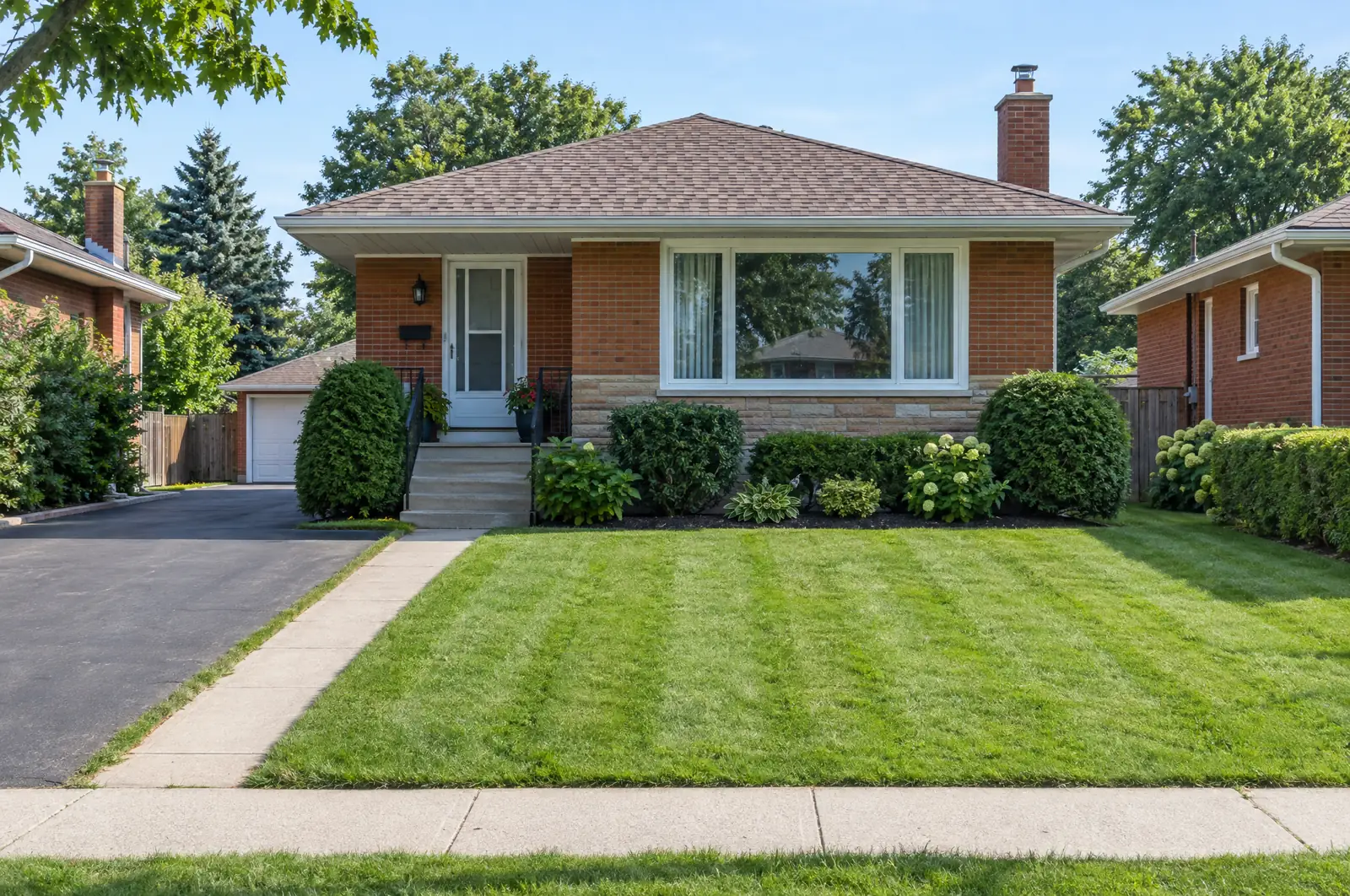
Lawn stripes aren't two colours of grass. They're light. When a mower bends the grass away from you, the blades show you their long, flat side and look light green. When the grass leans toward you, you see the tips and the shade below, so it looks dark green. To get stripes, mow in straight rows and go back and forth, so each row leans the opposite way.
Why does mowed grass look light and dark?
The University of Minnesota's turf team tested this. Their answer comes down to three things:
- How the light hits the grass
- How much leaf surface faces you
- Where you stand when you look
Stand behind a mower as it cuts. The grass gets pushed back toward you. More leaf faces the sun, so more light bounces back. That row looks light green.
Now stand in front of the mower. The grass gets pushed toward you. You see less leaf and more shadow. That row looks dark green.
So the same row can look light from one end of the yard and dark from the other. Walk to the far side of a striped lawn and the stripes swap. It's a neat trick to show the kids.
Doesn't mowing flip the grass blades over?
That's a common belief, and Minnesota calls it a misconception. Grass blades do have two sides that look a bit different. But a mower doesn't turn every blade the same side up. The odds of that are low.
Minnesota's test settled it. They laid perennial ryegrass and Kentucky bluegrass leaves forward and back under one light. Leaves leaning away looked lighter. Leaves leaning toward the camera looked darker. It didn't matter which side of the leaf was up.
What makes lawn stripes stronger?
Minnesota names three things that boost the stripes:
- A higher cut. Longer blades have more surface to catch the light.
- Grass that bends easily. Cool season grasses bend more than warm season grasses.
- A roller after the mow. A roller presses the grass down in the direction you travel.
How high should the grass be for good stripes?
Health Canada says to cut at 6 to 8 cm (2.5 to 3 inches). Grass at that height grows deeper roots and a thicker lawn. Ohio State lists 5 to 10 cm (2 to 4 inches) for Kentucky bluegrass.
So a healthy height and a striped lawn go together. Don't drop the deck to get a "clean" look. Short grass bends less and shows weaker stripes. Our mowing height guide has the full rundown.
How do you get lawn stripes at home?
You don't need a special mower. Any mower bends the grass a bit as it rolls. A roller or striping kit just makes the effect stronger. Here's the basic method:
- Mow a border lap first. Go once or twice around the edge of the lawn. This gives you room to turn at the ends of each row.
- Pick a straight line. Start your first row along a driveway, walk or fence. A straight first row makes every row after it straight too.
- Mow to the far end. Keep your eyes on a fixed spot ahead, not on the mower.
- Turn on the border and come back. Line up right beside the last row and overlap it a little. This row will lean the other way.
- Repeat across the lawn. Back and forth, row by row.
- Finish with one more border lap. This cleans up turn marks at the ends.
Then look at it from where people see it most. That's usually the street or your front window. Stripes that run straight away from that view show up best.
Can you mow a checkerboard or diagonal pattern?
Yes. For a checkerboard, stripe the lawn one way. Then mow it again at a right angle, across the first rows. The squares form where the two passes cross.
Diagonals work the same way, just at an angle to the house. Start with plain straight stripes, though. They're the easiest to keep tidy.
Can stripes hurt your lawn?
Stripes themselves don't. Mowing the exact same lines every week can. Ohio State University Extension says to change your mowing direction every one or two mows.
Here's why. Mowing at a right angle (90 degrees) to the last mow keeps grass from being pushed and flattened the same way over and over. That matters more when you keep the grass tall. Changing direction also cuts down on scalping, since the blade doesn't keep hitting the same high spots.
So switch it up. Mow north to south one week, then east to west the next. Or flip between straight and diagonal stripes. You still get a striped lawn, just a different pattern.
What else ruins a striped lawn?
Ohio State lists a few habits that hurt the cut and the grass:
- Cutting off too much. Never take more than a third of the blade at once. Going past that risks scalping, which can badly damage or kill grass.
- Dull blades. They fray the tips and leave brown patches. Brown tips dull the light and dark contrast too. See why sharp mower blades matter.
- Wet grass. It's harder to cut cleanly and it clogs rotary mowers. Our post on mowing wet grass covers what to do on a damp week.
How do lawn care crews get such clean stripes?
There's no secret. It's the same method, done the same way every visit. A few things help a crew:
- Their mowers often have wide decks, so there are fewer rows to line up.
- Some mowers have a roller or striping kit behind the deck.
- They know the yard. The same crew learns where the straight lines and tight corners are.
- They mow on a steady schedule, so the grass stays at a good height to bend.
That steady schedule is a big part of it. A lawn that's cut every week stays in the height range where stripes show. One that grows shaggy between cuts needs a heavy cut, and the stripes look ragged after. Our FAQ on how often to mow in Canada explains the timing.
Can I ask my crew for stripes?
Yes, just ask when you book your lawn mowing. Tell your crew which view matters most to you, like the street or your back deck. Also say if you'd like a checkerboard. Small yards with lots of beds, trees or slopes may not stripe as clearly. That's just the shape of the yard.
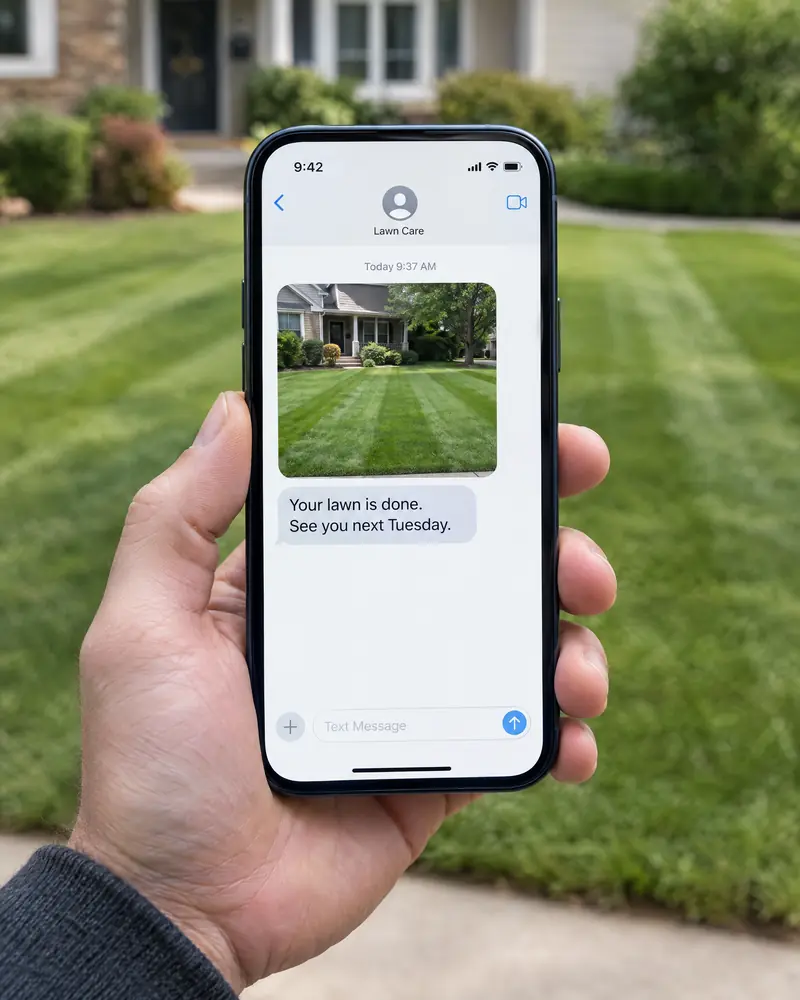
You'll see the result too. Your crew texts you a photo after every cut. If a cut isn't right, the Love-It Guarantee lets you text us a photo within 24 hours. Your crew re-cuts it free within 48 hours.
Who mows my lawn with Golden Oak?
Golden Oak Lawn Care matches you with a vetted, insured local crew. They do the work. We stand behind it with the Golden Oak Guarantee. You get the same crew every visit, and a season plan through the Worry-Free Lawn Season keeps the cuts on a steady schedule.
Want it handled? Get your price in 60 minutes, or call 1-866-904-LAWN.
Lawn Stripe Questions
Do I need a special mower to get lawn stripes?
No. Any mower bends the grass a little as it moves. A roller or striping kit makes the stripes stronger. Mowing straight rows back and forth does most of the work.
Why do my stripes look different from the other end of the yard?
Because stripes are light, not colour. Grass leaning away from you looks light, and grass leaning toward you looks dark. Walk to the other end and the light and dark rows swap.
Should I mow the same stripe pattern every week?
No. Ohio State says to change direction every one or two mows. Mowing at a right angle to the last cut keeps the grass from getting flattened one way and cuts down on scalping.
Why don't my stripes show up?
The grass may be cut too short to bend. Raise the cut to 6 to 8 cm (2.5 to 3 inches). Dull blades and wet grass can also leave a ragged look that hides the stripes.
Sources: University of Minnesota Turfgrass Science, Ohio State University Extension lawn mowing fact sheet, Health Canada: maintaining a healthy lawn.