Seasonal guide
How Short Should You Cut Grass Before Winter? It Depends on Your Grass
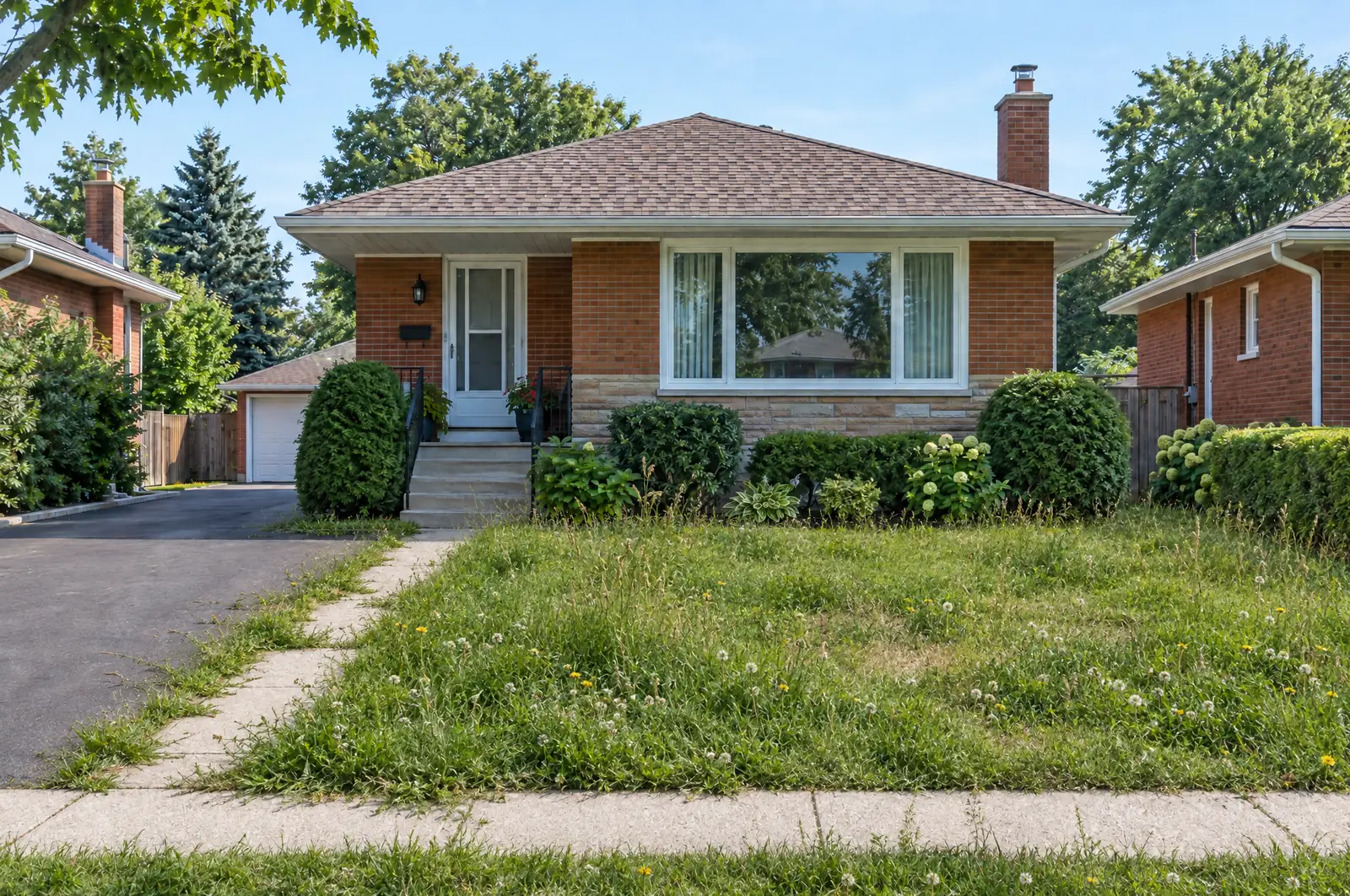
Before winter, cut most Canadian lawns to 5 to 7.5 cm (2 to 3 inches). Where you land in that range depends on your grass. Kentucky bluegrass, ryegrass and fine fescue in full sun can go as low as 5 cm (2 inches). Tall fescue should stay at 6.5 cm (2.5 inches) or more. Shady spots should sit higher still. Get there in steps, and never take off more than a third of the blade in one cut.
Do the experts agree on how short to cut grass before winter?
Mostly. They agree on the range. They don't agree on whether to drop the mower for the last cut. Here's what five official sources say:
- University of Nebraska-Lincoln: raise the mower a little as fall goes on, to 6.5 to 7.5 cm (2.5 to 3 inches). That protects the crown, down at the base of the plant. Then set it lower, to 5 to 6.5 cm (2 to 2.5 inches), for the very last mow. They say that helps the lawn get ready for winter and fights snow mould.
- Iowa State University Extension: lower the mower in mid to late September, from 7.5 to 9 cm (3 to 3.5 inches) down to 6.5 to 7.5 cm (2.5 to 3 inches).
- Purdue University Extension: pick the right height for your grass and don't change it during the year.
- University of Saskatchewan: mow to your normal height in autumn.
- Health Canada: grass cut at 6 to 8 cm (2.5 to 3 inches) grows deep roots and gets thicker.
So nobody tells you to scalp the lawn. Nobody tells you to leave it shaggy, either. Every fall target above sits between 5 and 8 cm (about 2 and 3 inches). The real question is how close to the bottom you can go. That comes down to three things: your grass, your shade and your ground.
How short should you cut each type of grass before winter?
Ohio State and Purdue both publish a mowing chart by grass type. Their top numbers differ a little. Their bottom numbers match. That bottom number is your floor for the last cut.
| Grass type | Lowest normal height (Ohio State and Purdue) | Our pick for the last cut |
|---|---|---|
| Kentucky bluegrass | 5 cm (2 in) | 5 to 6.5 cm (2 to 2.5 in) |
| Perennial ryegrass | 5 cm (2 in) | 5 to 6.5 cm (2 to 2.5 in) |
| Fine fescue | 5 cm (2 in) | 5 to 6.5 cm (2 to 2.5 in) in sun |
| Tall fescue | 6.5 cm (2.5 in) | 6.5 to 7.5 cm (2.5 to 3 in) |
Our picks for the first three match Nebraska's last-mow range. Tall fescue is the odd one out. Nebraska's lowest setting, 5 cm (2 inches), is below the bottom of the tall fescue range in both charts. So keep tall fescue at 6.5 cm (2.5 inches) or higher, even on the last cut.
What if you don't know your grass, or it's a mix?
Then use 6.5 cm (2.5 inches). It's at or above the floor for all four grasses. It sits inside Nebraska's last-mow range, Iowa State's fall range and Health Canada's range. It's the safe middle for almost any lawn.
Want to know what you're growing? Our fescue lawn guide and Kentucky bluegrass guide cover each grass and how it likes to be cut.
Does shade change how short you should cut?
Yes. Grass in the shade needs more leaf to catch what little light it gets. Ohio State says to raise the height for shady lawns. Purdue puts a number on it: mow shaded lawns 1.5 to 2.5 cm (0.5 to 1 inch) higher than normal.
So skip the low last cut under big trees and along the shady side of the house. Say the sunny part gets cut to 6.5 cm (2.5 inches). Then leave the shady part at 8 to 9 cm (3 to 3.5 inches). Bumping the deck up for that strip takes a minute.
Shady spots under trees also catch the most leaves. Rake those off before the last cut, so the grass isn't buried all winter.
Should you cut lower on a bumpy yard?
No, go a little higher. On rough ground, the mower deck rides up and down. Each high spot gets cut lower than the setting says. Ohio State warns that scalping can badly damage or kill grass.
A few habits help on uneven lawns:
- Raise the deck one notch over the setting you'd use on flat ground.
- Mow at a right angle to your last pass. Ohio State says changing direction keeps the blade from hitting the same spots every time.
- Walk the bumps after the first strip. If you see bare soil or brown stubble, go up another notch.
- Use a sharp blade. Health Canada says grass recovers faster from a clean cut than from a torn one.
What happens if you cut grass too short before winter?
A scalped lawn goes into winter weak. The University of Saskatchewan says grass mowed too low lives in constant stress. It gets more disease, and weed seeds move in more easily. If short mowing keeps up, the grass can die.
Purdue adds that mowing below the right height holds back root growth. It leaves grass more open to damage from insects, disease, drought and foot traffic. Low mowing also favours weeds.
It's tempting to drop the deck all the way and call it done for the year. The experts don't back that up. That's why the low last cut only goes down to the bottom of your grass's normal range, and never past it.
What happens if you leave grass too long over winter?
Long grass flops over and mats down under the snow. The University of Saskatchewan lists lawns "left long and matted over winter" as one of the things that favour snow mould. Leaves left on the lawn in fall are another. Their advice is plain: cut and rake the lawn before snow arrives.
Snow mould comes from fungi that like cold, wet conditions. You see it in spring, after the snow melts. Our guide to snow mould and fall cleanup has the full story.
Long grass can also invite voles. The City of Calgary says voles cause trouble mostly in winter, working under the snow. It says mowing your lawn lowers the odds of voles moving in, because tall grass is ideal vole habitat. Our partner crews don't spray or do pest control, and we don't give treatment advice. A tidy last cut is just good housekeeping.
It's November and your grass is still long. Is it too late?
Usually not. Iowa State says to keep mowing until the grass stops growing. Cool-season grass like Kentucky bluegrass stops once daytime highs stay below 10°C (50°F). Our post on when grass stops growing shows how to tell.
Pick a dry afternoon. Wait until any frost has melted off the lawn. Our post on mowing after a frost explains why. Then work through these steps:
- Clear the leaves. Rake heavy piles off first. A light layer can be chopped up with the mower. See our tips on mulching leaves with a lawn mower.
- Check the height. Push a ruler into the grass. Under the one-third rule, grass up to about 10 cm (4 inches) can come down to 6.5 cm (2.5 inches) in one cut.
- Too tall for one cut? If the grass is still growing, Purdue says to raise the deck and lower it back over a few mowings. If you're short on time, Ohio State gives a two-pass method for grass that got too tall in wet weather. Mow once on the highest setting. Let the clippings dry. Then lower the deck and mow again in a different direction.
- Finish clean. Rake up any heavy clumps of clippings left sitting on top.
Until growth stops, mow whenever the grass grows a third past your set height. Our FAQ on how often to mow your lawn in Canada covers the timing. If the lawn looks the same a week after a cut, you're done. Our guide to the last mow of the season covers that final day in more detail.
Can a local crew set the last cut for your lawn?
Yes. Golden Oak Lawn Care matches you with a vetted, insured local crew in your city. They do the work. We stand behind it with the Golden Oak Guarantee.
Your crew can do the final cut as part of a fall cleanup, with the leaves cleared first. Next year, the Worry-Free Lawn Season covers regular lawn mowing from spring to fall. The same crew comes every visit and texts you a photo when the job is done.
We price every lawn by its size from satellite images, so no one needs to visit. Lawn size, how often you want cuts, slopes, gates and leaf volume all change the price.
Want it handled? Get your price in 60 minutes, or call 1-866-904-LAWN.
Winter Mowing Height Questions
Is 2 inches too short for grass going into winter?
It depends on the grass. For Kentucky bluegrass, ryegrass and fine fescue in sun, 5 cm (2 inches) is the bottom of the normal range in the Ohio State and Purdue charts. For tall fescue, it's too short. Keep tall fescue at 6.5 cm (2.5 inches) or more.
Should I leave my grass longer to protect it over winter?
Not much longer. Nebraska says a taller fall lawn protects the crown. But the University of Saskatchewan links long, matted grass to snow mould. A normal height of 6.5 to 7.5 cm (2.5 to 3 inches) is the safe middle.
Is it too late to cut my grass in November?
Not if the lawn is dry and the frost has melted. If the grass is still growing, keep mowing. Even after it stops, one more cut on long grass follows the University of Saskatchewan's advice to cut and rake before the snow.
What if I already cut my lawn too short this fall?
Leave it be, and don't lower it again. The University of Saskatchewan's warning is about grass that keeps getting mowed short. Next spring, set the mower back to your normal height. Purdue says to keep that height all year.
Sources: Nebraska fall turf tips, Iowa State fall lawn care, Iowa State: when to stop mowing, Ohio State mowing guide, Purdue lawn mowing (AY-8), USask managing your lawn, USask snow mould, Health Canada lawn care, City of Calgary voles.