Seasonal guide · Canada
Is It Too Late to Trim Hedges in the Fall?
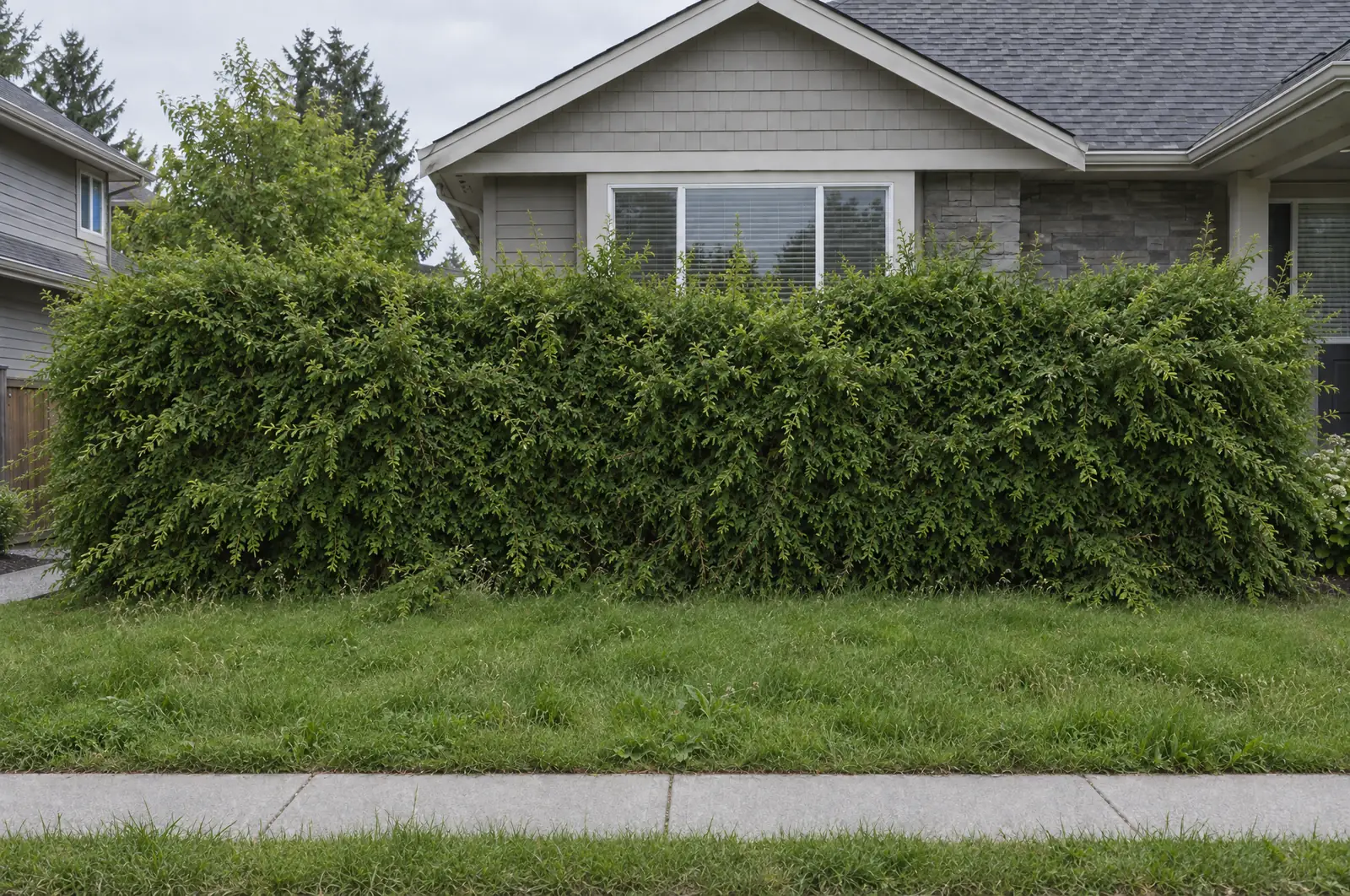
For a full trim, yes. In most of Canada, fall is too late to shape a hedge. A fall cut can push out soft new shoots that the cold can damage, and cuts heal slowly in cool weather. You can still cut out dead, broken or diseased branches any time. Save the real trim for later. Cedar and other evergreen hedges get trimmed in early spring. Leafy hedges like privet take big cuts best in late winter.
Why is fall a bad time to trim a hedge?
It comes down to what's going on inside the plant. The University of New Hampshire Extension says fall is a poor time to prune woody plants. As the days get shorter, a hedge pulls its food down into the roots for winter. That stored food fuels next spring's growth.
A cut sends the opposite signal. It can tell the plant to grow. Penn State Extension says pruning stimulates new growth, so late summer and fall aren't good times to prune. That new growth is soft. UNH says it's prone to frost and cold damage.
There's a second problem. UNH says fall is a time when fungus levels are high. Every fresh cut gives disease a way in. And cool weather slows healing, so those cuts stay open into winter.
So a fall trim works against your hedge in two ways:
- Soft new shoots. They don't have time to toughen up before the cold.
- Slow-healing cuts. They stay open to disease well into winter.
When does it get too late to trim a hedge?
Earlier than most people think. Iowa State University Extension says to avoid big pruning jobs after mid-summer. It says pruning shrubs in August or early September may push out a late flush of growth. That growth may not harden before the cold comes, so winter can injure it.
Iowa State's hedge schedule fits that. Shear a leafy hedge in spring, right after the first flush of new growth (May in Iowa). Do a second trim in mid-summer (July) if it needs one. Then stop for the year.
Iowa isn't Canada, though. So check when the cold usually shows up where you live. Here's the average first fall frost in seven Canadian cities:
| City | Average first fall frost |
|---|---|
| Saskatoon, SK | September 15 |
| Lethbridge, AB | September 17 |
| Kelowna, BC | September 28 |
| Sudbury, ON | October 1 |
| Moncton, NB | October 4 |
| Hamilton, ON | October 14 |
| Windsor, ON | October 30 |
These are Environment and Climate Change Canada averages from 1981 to 2010. By mid-October, the first frost has usually come and gone in six of these seven cities. So treat your mid-summer touch-up as the last real trim of the year.
Does it matter what kind of hedge you have?
Yes. The answer shifts a little for evergreen, leafy and flowering hedges.
Cedar and other evergreen hedges
Don't trim these in fall. Iowa State says fall-pruned evergreens are more likely to get winter injury. It says to start trimming evergreen hedges in early spring (April in Iowa). Penn State says sheared evergreens get their main trim in early spring, with an optional light trim in summer.
Our post on when to trim cedar hedges covers the full cedar year, from shape to height.
Leafy hedges like privet, alpine currant and barberry
Iowa State names these three as leafy shrubs that work well as formal, sheared hedges. For leafy hedges, it says big cuts are best late in the dormant season. In Iowa, that means late February and March.
What about once the leaves drop? UNH says you can start pruning once woody plants are dormant. But it says that's likely after the new year in New Hampshire. It also says most people pick the late dormant season for big jobs. So even with bare branches, there's no rush. Late winter is the safe call.
Flowering hedges like lilac
Lilacs bloom on growth from the year before. So any cut between now and spring takes off some of next spring's flowers. Iowa State says trimming a lilac hedge in the dormant season removes many of its flowers. Trim it right after it blooms instead.
What can you still cut this fall?
A few jobs can't wait, and that's fine. Iowa State says dead, broken and diseased branches can come off at any time of year. The Government of Alberta's pruning tips sheet calls this the "3D" list: dead, diseased or storm-damaged.
- Dead branches. Take off just the dead part. UNH says this doesn't hurt the plant, as long as you don't cut into live wood.
- Broken branches. UNH says safety comes first. Clear what's hanging or in the way. Bigger cleanup cuts can wait until the plant is fully dormant.
- Diseased branches. UNH says to keep the cut as small as you can. Clean your tools, so you don't spread the problem to the rest of the hedge.
If you spot disease, that's where our advice stops. Our partner crews don't spray, and Golden Oak doesn't give advice on chemicals.
What if the hedge is blocking the sidewalk?
Cut back only the part that's in the way. Your city may have a rule about this. Hamilton does. Its Yard Maintenance By-law No. 10-118 says hedges, shrubs and plants can't hang over the sidewalk, shoulder or roadway. Check your own city's yard rules before you plan. Our Hamilton lawn care page has more on that city.
What if your hedge is badly overgrown right now?
Wait for late winter. Iowa State says the best time to bring back a big, overgrown shrub is late winter or early spring (March or early April). A hard cut in October brings all the fall problems above, only bigger.
A leafy, formal hedge like privet can take a big reset. Iowa State says you can cut it back to 10 to 15 cm (4 to 6 inches) above the ground in late winter or early spring. Then shear the new shoots often as they grow back in spring and summer. Keep the base a little wider than the top.
For other overgrown leafy shrubs, Iowa State has a slower, three-year plan:
- Year one, in late winter or early spring: remove one third of the big, old stems at ground level.
- Year two, same time: take out half of the old stems that are left.
- Year three: remove the rest of the old wood.
Evergreen hedges can't take that kind of cut. Iowa State says not to cut evergreens back into the dead part of their branches. Any big gap that opens up stays. Yew, and to a lesser extent arborvitae, can grow new shoots from bare stems. But Iowa State says a hard cut can leave them looking rough for five or more years. Either way, the work starts in late winter or spring, not in October. Our guide on how to trim a hedge walks through shape and cleanup.
How do you get a hedge ready for winter without trimming it?
Put the shears away and do these jobs instead:
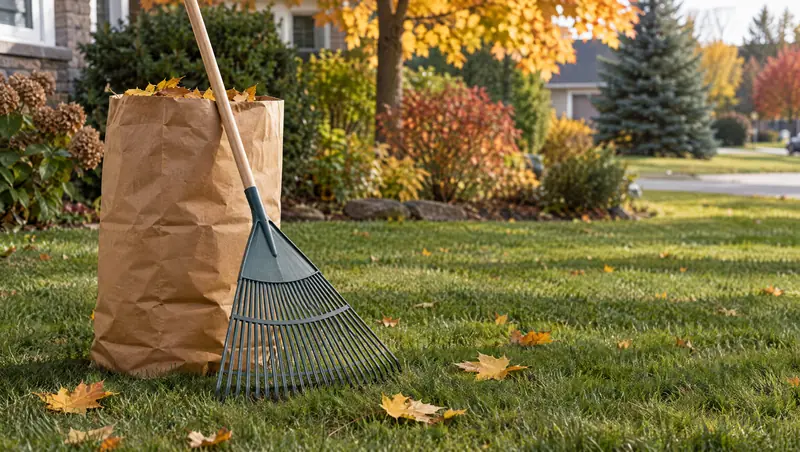
- Rake out the leaves. Clear fallen leaves and sticks from under and around the hedge. It's part of a normal fall cleanup.
- Tie up tall, upright evergreens. University of Illinois Extension says upright evergreens with many stems, like arborvitae and juniper, often break under snow or ice. Before winter, tie the branches together loosely with strips of cloth or coated twine. Take it off in early spring.
- Brush off heavy snow gently. Illinois Extension says to do it before the snow freezes on. Don't chip at ice. Let it melt on its own.
- Keep salty snow off cedars. The Ontario government says eastern white cedar does not tolerate road salt. Shovel driveway snow somewhere else.
Shape helps too. Iowa State says a hedge that's narrower at the top than the bottom holds less snow on top. Snow piled on top can break branches. You can't fix the shape this fall, so make it the goal for the spring trim.
When should you plan next year's hedge trim?
Now is a good time to plan. Fall has one thing going for it: it's outside the nesting season. Environment and Climate Change Canada says the general nesting period can start as early as mid-March and run until late August. It also says those dates can be off by 10 days or more.
That means spring trims run right into the start of nesting. Canada's guidance says to use caution at the start of the period. So plan your trim early, and look for nests before you cut. Our post on trimming hedges in nesting season explains the federal rules.
Here's a simple plan for the year ahead:
| When | What to do |
|---|---|
| Now until the snow | Dead, broken and diseased branches only. Rake out leaves. Tie up tall evergreens. |
| Late winter | Big cuts on leafy hedges like privet. Start bringing back overgrown hedges. |
| Early spring, before new growth | Main trim for cedar and other evergreen hedges. Check for nests first. |
| Spring, after the first flush | First shear on leafy hedges. Trim lilac right after it blooms. |
| Mid-summer | Light touch-up. Your last trim of the year. |
Can a local crew take care of your hedge?
Yes. Golden Oak Lawn Care matches you with a vetted, insured local partner crew. They do the work. We stand behind it with the Golden Oak Guarantee. Here's what vetted and insured means for the crews we work with.
Your crew can handle hedge and shrub trimming at the right time of year, plus trimming and edging along the base. This fall, they can clear the leaves from under your hedge as part of a cleanup. In spring, the same crew can come back for the trim.
We price every yard from satellite images, so no one has to come by. Hedge length and height, gates, slopes and haul-away all change the price.
Want it handled? Get your price in 60 minutes, or call 1-866-904-LAWN.
Fall Hedge Trimming Questions
Can I trim my hedge in October?
Not a full trim. You can cut out dead, broken or diseased branches any time. Save the shaping for late winter or early spring, depending on the hedge.
Will a fall trim kill my hedge?
Probably not. The Government of Alberta's pruning tips sheet lists that idea as a myth. The real risks are soft new growth that winter can damage, and cuts that heal slowly.
Can I trim a hedge after the leaves fall off?
UNH Extension says pruning can start once woody plants are dormant. Big jobs on leafy hedges still go best in late winter. Cedar and other evergreen hedges should wait for spring.
What's the latest I can trim a hedge in summer?
Iowa State says a second shearing in mid-summer (July) is fine if the hedge needs it. Skip big cuts after that. Cuts in August or early September can push growth that won't harden before the cold.
Sources: UNH Extension fall pruning, Iowa State pruning times, Iowa State formal hedges, Iowa State overgrown shrubs, Penn State flowering shrubs, Penn State needled evergreens, Government of Alberta tree pruning tips, Illinois Extension snow and ice damage, Ontario eastern white cedar, City of Hamilton yard maintenance, ECCC nesting periods, Environment and Climate Change Canada climate normals 1981 to 2010.