How-to
How to Trim a Cedar Hedge Without Damaging It
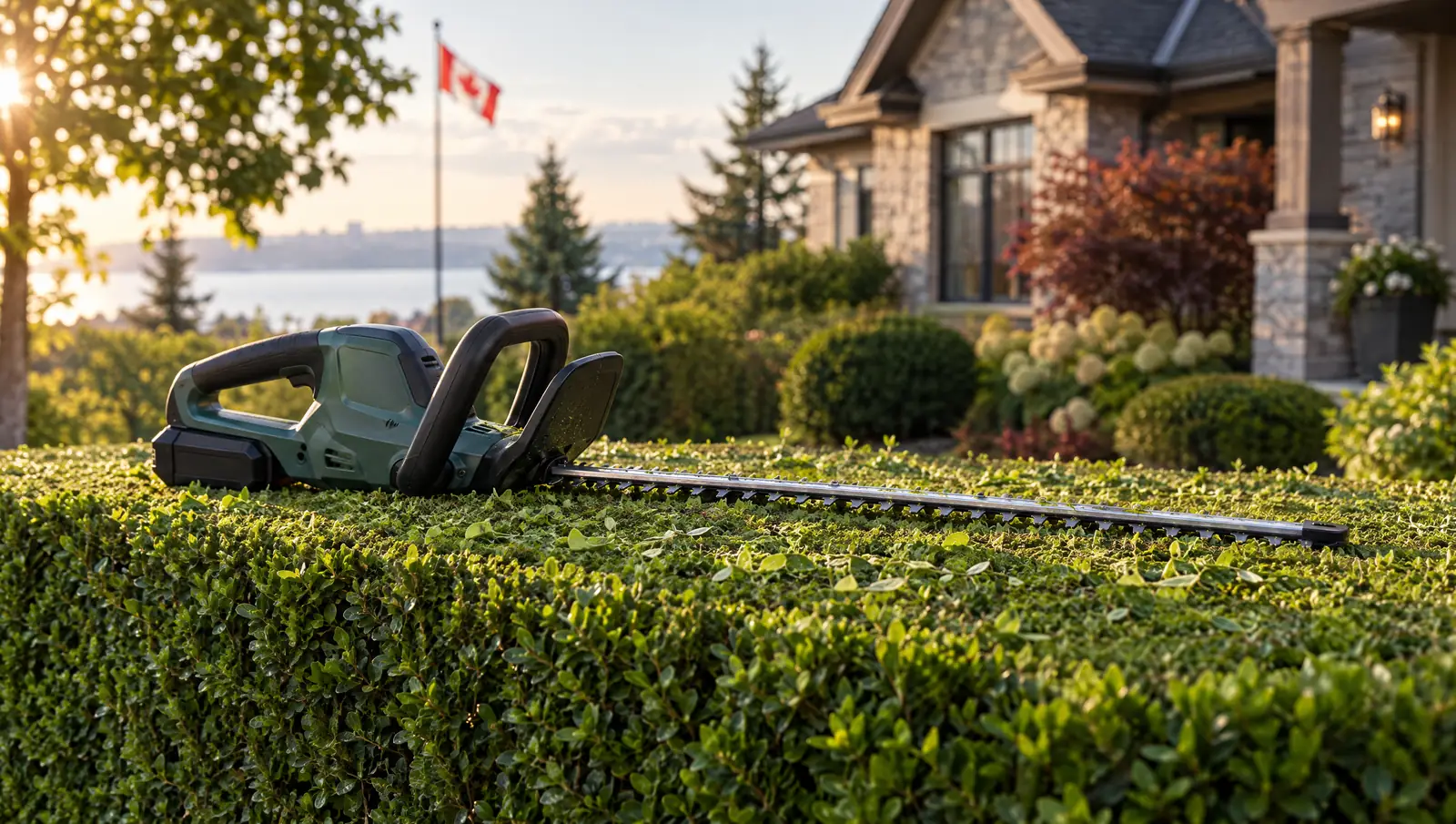
To trim a cedar hedge without damaging it, cut only the soft green growth on the outside. Never cut into the bare brown wood inside, because those spots usually don't grow back. Take a little at a time, and keep the bottom a bit wider than the top. Do the main trim in early spring, before new growth starts. This fall, skip the shears and tie tall cedars up before the snow.
Why is a cedar hedge so easy to damage?
Push the branches apart and look inside your hedge. You'll see a layer of green on the outside. Behind it, the stems are bare and brown. That green layer is the whole hedge, as far as new growth goes.
Colorado State University Extension explains why. On these evergreens, new growth comes only from the growing tips. So you can't cut a branch back into wood with no needles. If you do, Colorado State says you get a permanent bare spot. Penn State Extension agrees. It says cutting back to brown wood won't make that branch grow again. Yews are the one exception, and cedars aren't yews.
Not every expert says it quite that strongly. University of New Hampshire Extension says arborvitae, the cedar used in most hedges, can grow from buds on old wood. But two other extensions warn against it. So don't bet your hedge on a regrowth that may never come.
Years of hard shearing make the green layer thinner. Colorado State says shearing builds thick growth on the outside that shades out the inside. Over time, the plant turns into a thin shell of foliage.
How do you find out how deep you can cut?
Check before you start. It's quick, and it can save you from a hole that never fills.
- Reach in at a few spots. Part the foliage on the side, the top and near the ground.
- Find where the green stops. That line is your limit. Stay well outside it.
- Leave green on every branch you cut. The University of Arkansas Extension says to make sure green foliage is still on the branch after pruning.
- Don't take too much at once. Arkansas says to try not to remove more than one third of the plant in one go.
The green layer can be thicker in some spots than others. That's why you check more than one place. If you find only a thin layer, plan a light trim and leave it there.
Should you shear a cedar hedge or cut it by hand?
Most cedar hedges do best with a bit of both. Shearing is the fast part. Hand cuts are the careful part.
Colorado State says shearing is quick and easy but not the best choice, especially after midsummer. It also says plants that get sheared often show more needle browning and dieback from winter cold and drying winds. Its preferred method takes longer: cut single branches back to an upward-growing side branch. That keeps the plant looking young and natural.
Here's how that works on a cedar hedge:
- Shear the face lightly, just to set the line.
- Find the long shoots that still poke out past it.
- Reach in with hand pruners and cut each one back to a side branch, just inside the surface.
Each cut hides behind the green around it. You get a clean line without a chopped look. University of New Hampshire Extension says hand shears and loppers are the tools it recommends for all evergreens.
Keep your blades sharp. The Canadian Centre for Occupational Health and Safety (CCOHS) lists sharp blades in its hedge trimmer safety tips. Sharp blades cut clean. Dull ones snag and tear the shoots.
How do you trim a cedar hedge, step by step?
- Pick an early spring day. Penn State says sheared plants get their main trim in early spring, with an optional light trim in summer. Colorado State says to avoid subzero weather and late summer.
- Pick a dry day. CCOHS says not to use electric tools in the rain or on wet shrubs.
- Look for nests. Environment and Climate Change Canada says nesting can start as early as mid-March and run until late August. It says to use caution at the start of that period. Our post on trimming hedges in nesting season covers the federal rules.
- Check for hidden wires and posts. CCOHS says to check hedges for metal posts and wires before you trim.
- Do the sides first. Lean each side in a little as you go up. Penn State says a hedge should be an upside-down "V," wider at the bottom, so sun reaches the lower branches.
- Do the top last. Run a string between two stakes if you want it level. Go easy up there. Cuts on top are the hardest to undo.
- Hand-cut the strays. Snip the long shoots back to a side branch, inside the surface.
- Step back every few metres. Walk out to the lawn and look. Fix a low spot by trimming less next time, not by cutting deeper now.
That lean matters. Colorado State says a hedge that tapers in toward the bottom thins out down low, because the top shades it. Iowa State University Extension says a hedge that's narrower on top also holds less snow, and snow on top can break branches. For more on shape and cleanup for every kind of hedge, see our guide on how to trim a hedge.
How much can you take off the top of a cedar hedge?
Less than you'd like, and slower than you'd like. University of Maine Extension says the top of an arborvitae won't regrow once it's removed. It also says taking too much at once can leave dead spots on top and hurt the plant.
For a big height cut, UMaine suggests spreading it over 2 to 3 years. It suggests doing the work in late winter, close to early spring. University of New Hampshire Extension puts it plainly: don't try to fix years of neglect in one season.
Tall hedges bring one more risk. CCOHS says not to stand on ladders or chairs when you use a hedge trimmer. It says to use a long-reach trimmer for tall hedges instead.
When does trimming do the most harm?
Late summer and fall. University of New Hampshire Extension says pruning then can cause foliage burn that shows up in late winter. Colorado State says to skip late summer and subzero days.
So if it's late summer or fall where you are, the shears stay in the shed. Our post on when to trim cedar hedges lays out the full year. The short version: main trim in early spring, a light touch-up in mid-summer, nothing in fall.
How often should you trim? Iowa State says most hedges need 2 to 4 trims a season to stay sharp. Several light trims are safer for a cedar than one big one. Each pass takes a little, so you never reach the brown wood.
How do you protect a cedar hedge from snow this fall?
Snow is the other big way cedar hedges get hurt. University of New Hampshire Extension says arborvitae keep sending up upright shoots that tend to bend under snow and ice. The University of Wisconsin-Madison Extension says split arborvitae are the problem it hears about most after wet snow. It says the time to tie them up is late fall.
Here's how to do it without causing new damage:
- Tie before the first big snow. Iowa State says to tie up arborvitae before a snow or ice storm, in a cone shape that sheds snow.
- Use soft ties. Iowa State suggests strips of fabric, nylon hose or bungee cords. UW Extension says wire or rubber hose can girdle the branches.
- Take the ties off in spring. Iowa State says to remove them once the risk of heavy snow passes. Never leave training ties on more than two growing seasons.
- Brush snow upward. Iowa State says to sweep snow off with a broom by brushing up. Brushing down can snap bent branches. Don't beat ice off.
- Shovel away from the hedge. Iowa State says not to throw heavy, wet snow onto shrubs. The Ontario government says eastern white cedar does not tolerate road salt, so keep salty driveway snow off it.
This fall, the best job for your cedars is a cleanup at the base. Rake out the leaves and sticks that piled up under the hedge.
Can a local crew trim your cedar hedge for you?
Yes. Golden Oak Lawn Care matches you with a vetted, insured local partner crew. They do the work. We stand behind it with the Golden Oak Guarantee. Here's what vetted and insured means for the crews we work with.
Your crew can handle hedge and shrub trimming in spring, plus a light trim in summer. They trim into the green, not past it, and check for nests first. Many people add trimming and edging along the base, so the lawn line looks as sharp as the hedge. Your crew handles the plants it can reach from the ground or a short step ladder.
We price every yard from satellite images, so no one has to come by. Hedge length and height, gates, slopes and haul-away all change the price.
Want it handled? Get your price in 60 minutes, or call 1-866-904-LAWN.
Cedar Hedge Trimming Questions
Will a brown spot on my cedar hedge grow back?
Usually not. Colorado State says a cut back to bare wood leaves a permanent bare spot. Penn State says brown wood won't grow again on cedars. That's why it pays to stay in the green.
Can I use a power hedge trimmer on cedars?
Yes, for a light shear of the outside. Keep the blades sharp and stay well out of the brown wood. Then use hand pruners on the long shoots, cutting each one back to a side branch.
How much can I cut off the top of a cedar hedge?
Go slow. UMaine Extension says the top won't regrow and too much at once can leave dead spots. For a big drop in height, spread the work over 2 to 3 years.
Should I tie up my cedar hedge for winter?
If it's tall with several upright stems, yes. UW Extension says late fall is the time. Use soft, stretchy ties, not wire, and take them off in spring.
Sources: Colorado State pruning evergreens, Penn State needled evergreens, UNH pruning evergreens, University of Arkansas arborvitae, University of Maine arborvitae hedges, Iowa State formal hedges, Iowa State snow and ice damage, UW-Madison Extension Dane County, Ontario eastern white cedar, CCOHS landscaping equipment, ECCC nesting periods.